Berlin Food and Nightlife Itinerary: 2 Days + A Full Night (2026)
A Berlin food and nightlife itinerary: markets, currywurst pilgrimage, third-wave coffee, Michelin booking (28 stars in 2026), Berghain door logic, and the LGBTQ+ scene. Realistic, cash-aware, no clichés.
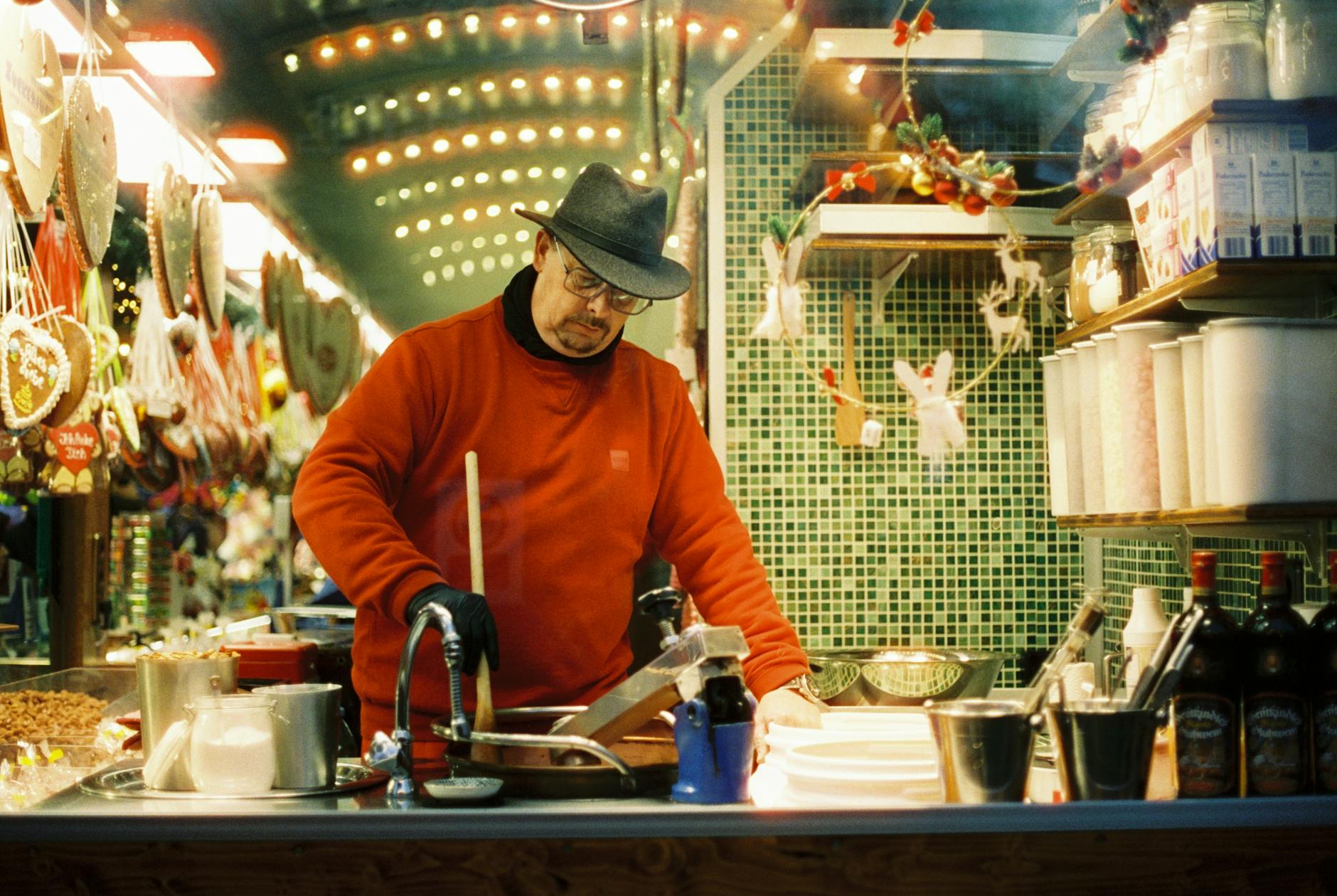
Berlin’s food and nightlife scene is two cities layered on top of each other. The street-food layer — currywurst, döner, döner-with-a-line-around-the-block, the Späti beer on the curb — is so densely myth-encrusted that visitors arrive thinking they know what to expect. The other layer — the 28 Michelin stars across 22 restaurants in the 2026 guide, the third-wave coffee scene that quietly became Europe’s best, the cocktail bars that are routinely on global top-50 lists, and a club culture that despite endless obituaries continues to set the tone for electronic music worldwide — is the layer most travel writing under-promotes.
What follows is a two-day-and-a-night itinerary built for the traveler who came to eat and drink the city. Day 1 covers the casual canon at its best (markets, döner pilgrimage, currywurst pilgrimage, a serious dinner). Day 2 covers the upscale layer (the morning third-wave coffee, the Michelin-star lunch alternative, the rooftop sunset bar) and a full club night with proper logistics. It assumes you’re not a teetotaler and you’re willing to be out until 06:00 at least once.
What to Book Before You Land
Berlin’s casual food is mostly walk-in. The upscale layer is not. If you’re flying in to do this itinerary right, book in this order, weeks ahead:
1. Nobelhart & Schmutzig. Micha Schäfer’s hyper-local 10-course menu in Kreuzberg, sommelier Billy Wagner pouring. €175 set menu, no salt-pepper-citrus, no ingredients from outside the immediate region. Book 4–6 weeks ahead at nobelhartundschmutzig.com. One Michelin star.
2. Horváth. Sebastian Frank’s Austrian-inflected modern cuisine on Paul-Lincke-Ufer, Kreuzberg. One Michelin star. Book 3–4 weeks ahead.
3. Tim Raue. Asian-inflected, intense, expensive. Two Michelin stars. The tasting menu runs ~€280 per person without wine. Book 4–6 weeks ahead at tim-raue.com.
4. FACIL. Michael Kempf at The Mandala Hotel, Potsdamer Platz. Two Michelin stars; the most “fine dining” of the bunch. Book 3–4 weeks ahead.
5. Buck and Breck. The 14-seat cocktail bar in Mitte. Mid-week walk-in is possible at 18:00 open; Friday/Saturday requires advance reservation via Resy or their booking page.
Cash matters: bring €100–200 in small notes. Most Spätis, Berghain, currywurst stands, kebab shops, and even some bars and small restaurants are cash-only. Cash acceptance is not improving in Berlin nightlife — it’s structural.
Day 1 — The Casual Canon: Markets, Döner, Currywurst, Dinner
The first day eats the city’s casual layer at its peak. Pace yourself — you’re eating four meals.
9:00 a.m. — Coffee at Bonanza Coffee Roasters (Prenzlauer Berg, Oderberger Straße 35 — the original; second location in Kreuzberg). The Berlin third-wave coffee scene’s progenitor, opened 2006. Single-origin pour-over, espresso done with the precision of a Tokyo café. Plan to spend 30 minutes. Alternative: The Barn (multiple locations — Lobeckstraße in Kreuzberg, Auguststraße in Mitte; founded by Ralf Rüller in 2010 and now one of Europe’s most decorated specialty roasters), Five Elephant (Reichenberger Straße, also runs an in-house bakery — the cheesecake is the cult item), or Father Carpenter (Münzstraße, the Australian-influenced brunch spot).
11:00 a.m. — Markthalle Neun (Eisenbahnstraße, Kreuzberg — U1 Görlitzer Bahnhof). The renovated 1891 covered market is the spine of Berlin’s serious food scene. Friday is Breakfast Market (10:00–15:00, multi-vendor with pastry and brunch focus); Saturday is Saturday Market (the proper Marktag, butcher, fishmonger, the city’s serious cheese counter at Maître Philippe, regional produce); Thursday is Street Food Thursday (17:00–22:00, the city’s best multi-vendor evening, ~€10–15 per plate). On other days, the permanent vendors — Heidenpeters craft brewery, Sironi Italian bakery, Maître Philippe French cheese — hold the hall down. Allow 2 hours minimum. Read our Turkish Market guide for the parallel Tuesday/Friday markets on Maybachufer, 10 minutes south.
1:30 p.m. — Mehringdamm pilgrimage: Curry 36 + Mustafa’s Gemüse Kebap. The two stands are adjacent. Curry 36 (since 1981) is the most-discussed Berlin currywurst — fast service, dependable quality, late-night-essential, ~€3 a wurst. Mustafa’s (since the mid-90s) is the most-mythologized döner in the city — the queue is reliably 30–60 minutes on Friday evenings, more on weekend nights. The trick is to come at off-hours: 14:30, 16:30, or after 23:00 on weeknights. The vegetable kebab (Mustafa’s signature) is grilled vegetables, herbed feta, and the now-iconic sweet chili sauce. For currywurst alternatives less queue-burdened, our currywurst guide ranks Konnopke’s (Prenzlauer Berg, since 1930 under the U2 viaduct — actually older than Curry 36), Mustafa’s neighbor Curry Wolf, and the Witty’s in Schöneberg.
3:30 p.m. — Tempelhofer Feld walk (10-minute U-Bahn down to Tempelhof, then walk in). 90 minutes of moving between meals — the 300-hectare former airport is the right slow-down. Bring an ice cream from the gate vendors.
5:30 p.m. — Klunkerkranich rooftop bar (Neukölln, Karl-Marx-Straße 66 — atop the Neukölln Arcaden parking garage, take the escalator to the 5th floor then up the staircase). €5 cover. Sunset views west over Tempelhofer Feld with a beer, often DJs, the most Berlin bar in the city. Allow 90 minutes.
8:30 p.m. — Dinner at Nobelhart & Schmutzig (Kreuzberg, your pre-booked tasting menu — three hours; bring patience and an empty stomach). If you couldn’t get Nobelhart, the strong alternatives in this casual-but-serious lane: Mr Susan (Schlesische Straße, modern German), Schneeweiß (Friedrichshain, modern Alpine), or Lode & Stijn (Kreuzberg, one Michelin star, more relaxed than Nobelhart, easier booking).
11:30 p.m. — One bar, then bed. Becketts Kopf on Pappelallee in Prenzlauer Berg — unmarked entrance, ring the bell, intimate room, classic cocktails. Or Velvet in Neukölln for the foraged seasonal weekly-rotating menu (rebellious wine list, food-forward bar program).
Day 2 — Upscale Layer + Club Night
Day 2 is the day to commit to the harder Berlin: morning lazy and slow, afternoon refined, evening dinner that’s not a tasting menu but is excellent, and the night out you came for.
11:00 a.m. — Late brunch. House of Small Wonder (Mitte, the spiral-staircase hideaway with American-Japanese fusion brunch — packed weekends, queue 30+ minutes), Anna Blume (Prenzlauer Berg’s institutional brunch — the famous breakfast tower for two), or Café Liebling (Prenzlauer Berg, less touristed). Allow 90 minutes.
1:30 p.m. — Recovery walk and coffee. Walk Mauerpark to Eberswalder, stop at Konnopke’s Imbiss under the U2 viaduct for a side-by-side currywurst comparison if you didn’t get to it on Day 1. Continue to The Barn on Auguststraße for a third-wave espresso reset.
3:30 p.m. — Wander Neukölln. Weserstraße, Sanderstraße, Reuterkiez. Drop into Fjord Fiesta (the Reuterkiez Scandinavian-influenced lunch spot if you’re still hungry), or Geist im Glas for an early-evening cocktail (the speakeasy aesthetic done well).
6:00 p.m. — Cocktails at Buck and Breck (Mitte, Brunnenstraße 177). The 14-seat counter cocktail bar that’s been on the World’s 50 Best Bars list for years. Goncalo de Sousa Monteiro and Holger Groll’s program is historical-deep — Pre-Prohibition recipes, Italian aperitif tradition, off-menu options if you can describe what you want. Walk-in possible mid-week at 18:00 open; weekends require booking. Two drinks, then move on.
8:00 p.m. — Dinner. Three lanes:
Lane A — Levantine: Yarok (Linienstraße, Syrian-Lebanese — the falafel and the eggplant dishes are essential; the night ends here for many Berliners). Alternative: Doyum (Kreuzberg, the city’s most-respected Turkish kitchen for pide and ocakbaşı grilling).
Lane B — Vietnamese: Monsieur Vuong (Alte Schönhauser Straße, the original; Mitte’s Vietnamese institution since 1999). Madami (Friedrichstraße area, more refined, modern interpretation).
Lane C — German Bistro: Lubitsch (Wilmersdorfer Straße, Charlottenburg — the classic Berlin bistro), Lutter & Wegner (Gendarmenmarkt, historic), or Restaurant 893 Ryōtei (Kantstraße, Japanese — outside the German lane but Kantstraße is the city’s serious Asian-food street).
10:30 p.m. — One drink, then the night out. Bar Zentral (Lotte-Lenya-Bogen, Charlottenburg, the cocktail bar with the railway-vault setting) or Tier (Neukölln, the influential Weserkiez bar with the listening-room vinyl program).
The Club Night: A Berlin Education
Berlin’s club scene is the most-mythologized and least-understood part of the city’s nightlife. The reality:
Clubs in Berlin start late. Arriving at midnight at a serious club (“serious” meaning Berghain, Tresor, ://about blank, Wilde Renate, Sisyphos) is too early — the floors fill from 02:00 and the headliners often play 04:00–06:00. Friday Klubnacht at Berghain runs Friday 22:00 to Monday 06:00. Sisyphos in Rummelsburg is a weekend-marathon venue. Don’t pace yourself like a New York or London night.
The door is real. Berghain’s door (run by Sven Marquardt’s team) is the most-discussed in the world. There is no formula. Wear black, arrive solo or in groups of 2–3 maximum, don’t be visibly drunk, don’t speak English loudly in line, don’t take photos near the entrance, accept that no is a normal answer. If you’re turned away from Berghain, ://about blank (5 minutes east) or Tresor (15 minutes north) will take you. Watergate closed permanently at end of 2024 — older articles still list it; don’t waste a taxi.
Phone stickers cover front and rear cameras at Berghain (provided at coat check). The no-photos rule is strictly enforced. The dance floor is a private space; this is non-negotiable.
Cash. €25 cover at Berghain, similar at the others. Drinks €4–5 for a beer, €8–12 for cocktails. Budget €40–80 for a full night.
The 2026 club options, ranked by what they offer:
Berghain / Panorama Bar / Säule: The three-room flagship in the former Vattenfall power station, Friedrichshain. Berghain (main floor) is the techno hall; Panorama Bar (upper floor) is the house room; Säule (basement annex) hosts the more experimental programming. Funktion-One sound system, no guest list, strict door. The architectural setting alone is the most singular nightclub interior on Earth.
Tresor: Celebrating its 35th anniversary in 2026 — book around the special programming. The former power plant on Köpenicker Straße houses three floors of techno; the basement vault (the original 1991 “Tresor” room) is acoustically and historically essential. Easier door than Berghain.
://about blank: Friedrichshain, the political-queer techno institution with one of the city’s best outdoor gardens for summer programming. The door reads vibe carefully but is friendlier than Berghain.
Sisyphos: Rummelsburg (a 15-minute taxi from central Friedrichshain). Former dog-biscuit factory, weekend-marathon culture, an outdoor festival-grade compound that often does Friday 22:00 to Monday afternoon. The friendliest door of the major venues; the queue is the test.
Wilde Renate: Friedrichshain near Schillingbrücke. Decorated like a haunted Victorian house, smaller, more forgiving door, the right introduction-to-Berlin-clubbing venue.
Kater Blau: Holzmarkt riverside complex (with Holzmarkt 25’s broader Spree-side compound). Melodic house leaning, daytime open-air programming in summer, the morning-light dancing tradition.
Transit: U8 and U1 run all night Friday/Saturday; M10 tram is your friend. Night buses (N-prefixed) fill the gaps. Uber/Bolt available; taxis cash-friendly. Don’t drink-drive obviously, but also don’t bike-drink — Berlin enforces cycling DUI.
The Morning After: Where Berliners Go
The “morning after” is its own Berlin institution. Friday-night clubbers emerge into Saturday morning and head to:
Schwarzes Café (Kantstraße, Charlottenburg): The 24-hour breakfast spot with the velvet sofas and the omelet menu that’s identical at 04:00 and 14:00. The classic Berlin morning-after move.
Curry 36 24-hour stand: Late-night currywurst is the city’s least-glamorous and most-necessary tradition.
Burgermeister under the U1 Schlesisches Tor viaduct: The burger stand in a former public toilet from 1899, open until 04:00. The cult burger of Berlin.
Mustafa’s at 03:00: The queue is shorter, the experience is identical.
Specialty Drinking: Beyond Cocktails
Wine: Berlin’s natural wine scene is quiet but excellent. Cordobar (Mitte, Grosse Hamburger Straße) is the city’s leading natural wine bar — small plates, biodynamic focus, walk-in possible mid-week. Jaja (Neukölln) is the neighborhood version of the same instinct.
Craft beer: Berlin’s craft scene has matured. Heidenpeters at Markthalle Neun (Saturday Market open hours), Eschenbräu in Wedding (Berlin’s oldest active craft brewery since 2001), Brauhaus Lemke at multiple locations for the brewery-restaurant experience. Berliner Weisse mit Schuss (with red or green syrup) is the city’s historic sour-wheat beer specialty — currently undergoing a small revival at Heidenpeters and Schneeeule.
Späti culture: A Späti is a corner shop open until 02:00 or later, selling beer (Sterni is the cheap student standard at ~€1.20), cheap wine, sandwiches, and last-resort necessities. Drinking a Sterni on the curb outside a Späti is a Berlin cultural practice; many Spätis put out plastic chairs and tables in summer. Free.
Vegan and Vegetarian Berlin
Berlin is one of Europe’s most vegan-friendly cities — by some measures, the most. Anchors worth knowing:
Brammibal’s Donuts (multiple locations) — vegan donuts done well. Kopps (Mitte, Linienstraße) — upscale vegan dinner. Sing Blackbird (Neukölln) — vintage-shop-meets-vegan-brunch. 1990 Vegan Living (multiple locations) — Vietnamese-influenced vegan everyday. Yoyo Foodworld (Neukölln) — punk-vegan curry sausages and döner. Markthalle Neun always has 30%+ vegan vendors on Street Food Thursday.
LGBTQ+ Nightlife: Specific Venues
Berlin’s queer scene is unrivaled in Europe. Read our full LGBTQ+ nightlife guide for the complete map, but the headlines:
Schöneberg is the historic gay neighborhood (Motzstraße is the spine). SchwuZ in Neukölln is the long-running queer dance club. Berghain began as Snax (a gay men’s sex party) and retains queer-rooted programming. Möbel-Olfe (Kreuzberg, Wednesday lesbian night) is the institutional dive. Roses (Kreuzberg) is the velvet-pink late-night bar. Trauma Bar und Kino (Mitte) is the experimental queer art-and-performance space.
Day-of-Week Logic for Eating and Drinking
Monday: Many restaurants closed. Markthalle Neun closed. Nobelhart & Schmutzig closed. Plan upscale dinners Tuesday–Saturday.
Tuesday/Friday: Turkish Market at Maybachufer (11:00–18:30). Slot in the canal-side market for an afternoon walk.
Thursday: Street Food Thursday at Markthalle Neun (17:00–22:00). The right Day 1 evening if you’re in town.
Friday/Saturday: Club nights. Sunday brunches book up.
Sunday: Shops closed by law (exceptions: Hauptbahnhof, Friedrichstraße station, airport). Mauerpark flea + food trucks are the Sunday-afternoon move; brunch reservations are essential.
The 2026 Michelin Map
Berlin’s 2026 Michelin guide gives the city 28 stars across 22 restaurants — one three-star, four two-star, 17 one-star. The headliners:
Three stars: Berlin’s single three-star restaurant (in flux year-to-year — check current guide).
Two stars: Tim Raue (Kreuzberg, Asian-inflected, intense), FACIL (Potsdamer Platz, Michael Kempf, classic fine dining at The Mandala Hotel), plus two others.
One star (the best value): Nobelhart & Schmutzig (Kreuzberg, hyper-local, no-imported), Horváth (Kreuzberg, Austrian-inflected), Lode & Stijn (Kreuzberg, more relaxed atmosphere), Bandol sur Mer (Mitte, tiny French), Cordo (Mitte, intimate set menu), einsunternull (Mitte, modern-German). The one-star tier is where Berlin’s tasting-menu sweet spot lives.
The Honest Endgame
Two days and a night of serious Berlin food and nightlife leaves you with a clear answer to the only question that matters: do you want to come back to live here for a month? Most travelers who do this itinerary properly start fantasizing about a Neukölln Airbnb by Day 2 brunch. The food scene rewards investment; the nightlife scene rewards patience and respect; the coffee scene rewards mornings; the bar scene rewards conversation.
If you came here for the eating and drinking, our themed counterparts will let you cross-reference: our art and culture itinerary covers the cultural programming that fills the late-afternoon hours between meals; our history itinerary grounds the city’s complicated character; and for the broader trip, our five-day and seven-day itineraries sequence one big food-and-nightlife day into a fuller schedule. On the calendar question, our summer guide covers the open-air club season and the Spree-side bars, and our best time to visit guide matches months to your priorities.