Berlin in Summer 2026: Festivals, Lakes & Open-Air Magic
The complete guide to Berlin in summer 2026 — Pride, Lollapalooza, Classic Open Air Gendarmenmarkt, the best swimming lakes, beer gardens, and beach bars.
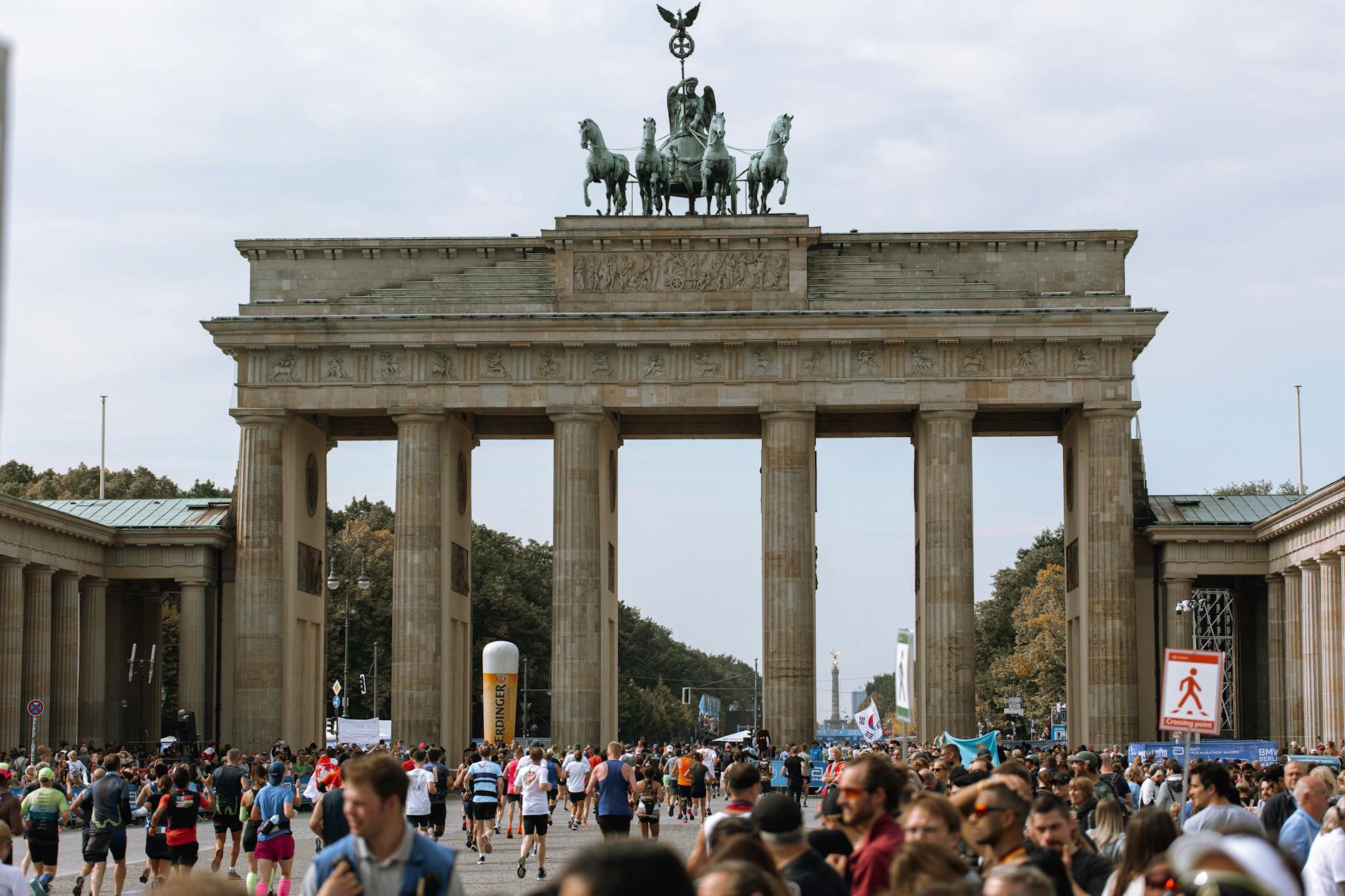
Berlin in summer is a different city. From late May through mid-September, the sun comes up before five and doesn’t fully set until ten, the lakes ring the suburbs with public beaches that feel borrowed from a Mediterranean country, and every weekend has at least three serious festivals competing for your evening. Locals will tell you Berlin is the best summer city in Europe — and after eight summers here, I think they’re right. The combination of long daylight, exceptional swimming infrastructure, free open-air events, and the world’s most relaxed park culture creates something you don’t get in Paris, Amsterdam, or London.
This guide covers what’s actually worth your time in summer 2026 — verified festival dates, the lakes you can reach by S-Bahn, the beer gardens locals actually go to, and the one thing every tourist gets wrong about Berlin summer weather.
Summer in Berlin at a Glance — Month by Month
| Month | Avg High / Low | Daylight | Headline Events |
|---|---|---|---|
| June | 22°C / 12°C | 16+ hours | Fête de la Musique (21), Long Night of Sciences (6), Christopher Street Day prep |
| July | 24°C / 14°C | 16 hours | Classic Open Air Gendarmenmarkt (9-14), Lollapalooza (18-19), CSD Pride (25) |
| August | 24°C / 14°C | 14-15 hours | Long Night of Museums (29), Klassik Open Air Britzer Garten (22), Pop-Kultur |
Why Berlin Is Europe’s Best Summer City
The case for Berlin summer is partly geographic — the city sits far enough north that midsummer evenings genuinely don’t end until ten — and partly cultural. There’s no European capital that takes outdoor public space as casually as Berlin does. You’re allowed to drink in parks, swim in city lakes, grill almost anywhere (Tempelhofer Feld being the obvious example), and sit on a beer-garden bench for six hours nursing one drink without anyone bothering you. The infrastructure has been built up over decades — the lake bathing tradition goes back to the 1920s, the public swimming pools are subsidized, and the festival calendar is dense enough that you can stumble into a free concert most weekends.
The catch: Berlin summer weather is not what most travelers expect. It’s pleasant rather than hot. Average July highs are 24°C, not 32°C. Rain happens, particularly in August. Thunderstorms can roll in violently and leave fifteen minutes later. Pack as if for a temperate European summer, not a Mediterranean one, and you’ll be fine.
Berlin’s Best Swimming Lakes
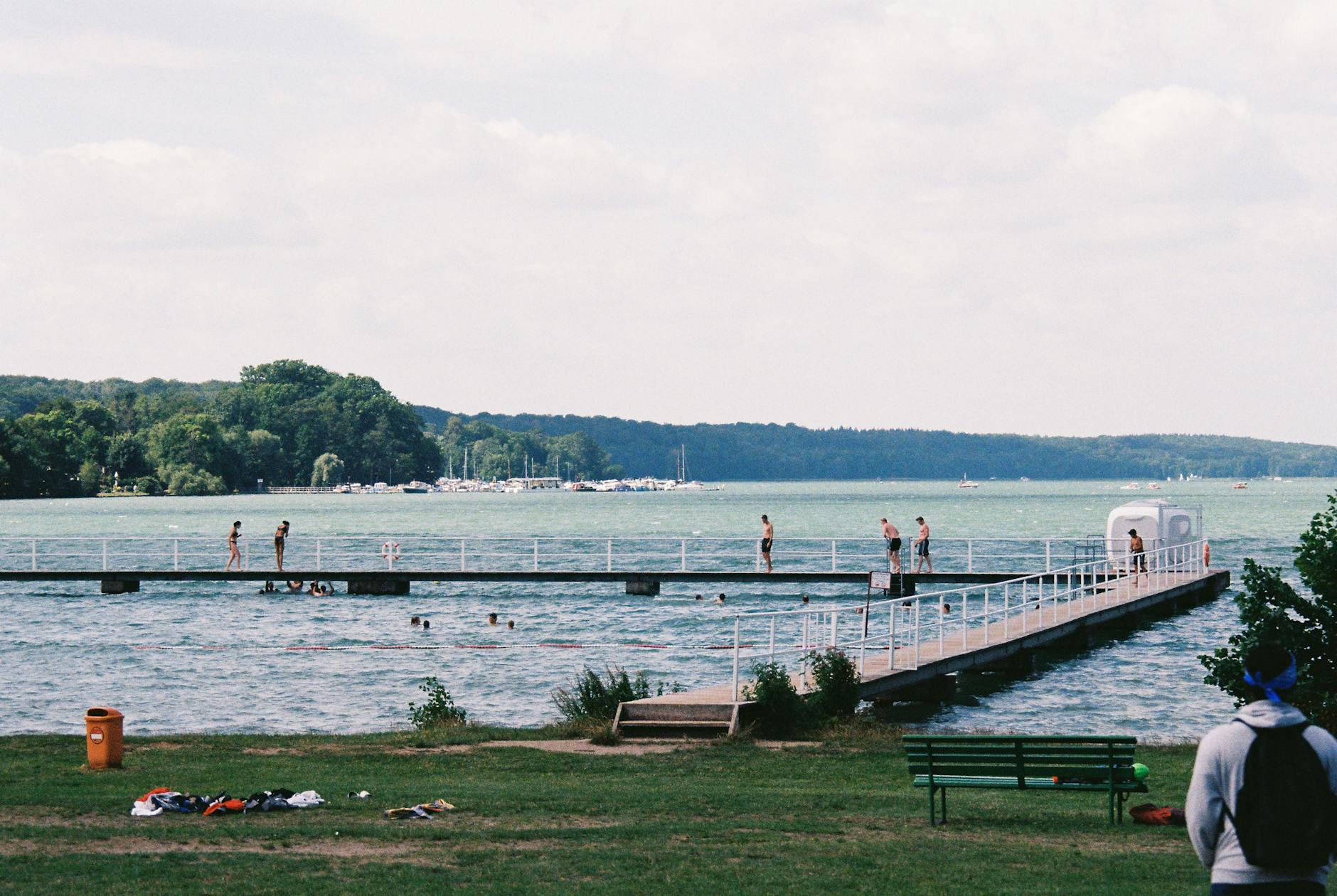
The single best thing about Berlin summer is that the city is surrounded by lakes you can reach in 30-45 minutes by S-Bahn. Every Berliner has a favorite — defending it like it’s a sports team — and the choices break down by character more than quality. All have free public swimming spots; the Strandbäder (developed swimming beaches with changing rooms, restaurants, and lifeguards) charge €6.50-8 for a day ticket.
Wannsee: The biggest, most famous, and most touristy. Strandbad Wannsee is one of the largest inland beaches in Europe, with restored 1930s architecture and a wide sandy stretch. €6.50 entry. S1 or S7 to Nikolassee, walk fifteen minutes, or S7 to Wannsee then bus. Gets crowded on hot weekends; weekday mornings are calmer. The non-Strandbad sections of the Wannsee lakeshore are free.
Müggelsee: Berlin’s largest lake, on the eastern edge of the city. Less polished than Wannsee, more local in atmosphere. Strandbad Müggelsee on the south shore is the developed beach; the woods around the lake offer endless free swimming spots. S3 to Friedrichshagen, then a walk or tram. Worth the trip on a weekday for the genuine away-from-the-city feeling.
Schlachtensee: The Berliner-favorite lake. Long and narrow, with a seven-kilometer boardwalk circling the whole thing, generally free swimming along most of the shore. The crowd is local, fashionable, slightly bourgeois. S1 directly to Schlachtensee. Bring a picnic.
Krumme Lanke: The smaller, quieter lake just south of Schlachtensee. Also reachable by U3 to Krumme Lanke (the line’s terminus). Slightly more elbow room than Schlachtensee, similar atmosphere.
Plötzensee: The closest lake to central Berlin, in Wedding. Smaller and more urban, but reachable in twenty minutes from Mitte. U6 to Rehberge or bus 142. The Strandbad here is family-friendly.
Berlin’s Biggest Summer Festivals
Fête de la Musique — June 21
An import from France that Berlin has taken to enthusiastically. June 21 (the summer solstice) sees free concerts across the entire city — every neighborhood, every genre, every venue from small bars to the Brandenburg Gate. The format is genuinely democratic: anyone can register to play a stage, and the city becomes a wandering music festival from late afternoon until midnight. Free, no ticket needed. Just walk a Berlin neighborhood with music spilling from open doors.
Long Night of Sciences — June 6, 2026
About sixty universities, research institutes, and labs across Berlin and Potsdam open their doors from 5 pm to midnight. Tickets cover access to all venues and the shuttle bus network connecting them. €18 standard, €12 reduced. Particularly good for kids — most institutes design hands-on programming. A separate event from the larger Long Night of Museums in August.
Classic Open Air Gendarmenmarkt — July 9-14, 2026
Six nights of classical and crossover concerts in the square between the matching French and German cathedrals. The 2026 edition opens July 9 with the Konzerthausorchester Berlin under Joana Mallwitz; the program also includes Giovanni Zarrella (July 10) and Alphaville (July 14). Tickets €45-95 depending on seating tier and night. The setting is one of the most beautiful concert venues in Europe.
Lollapalooza Berlin — July 18-19, 2026
The German edition of the Chicago festival, held at the Olympiastadion and surrounding grounds. Two days, multiple stages, a mix of international headliners and German acts. Tickets are pricey (€200+ for two-day passes typical) but the production value is on par with major European festivals. Take S5/S75 or U2 to Olympiastadion.
Christopher Street Day (Berlin Pride) — July 24-25, 2026
Berlin Pride 2026 is the city’s biggest single-day event — about a million people for the Saturday parade. The 2026 edition expanded to two days for the first time, with a Friday evening rally at Brandenburg Gate (July 24, 6-11 pm) and the main parade Saturday July 25 from noon, running from Leipziger Strasse through Potsdamer Platz, Bülowstrasse, Nollendorfplatz, and finishing at Urania. The atmosphere is part political demonstration, part massive party. Free, family-friendly during the parade, considerably more adult in the after-parties. See our LGBTQ+ nightlife guide for the queer scene year-round.
Klassik Open Air Britzer Garten — August 22, 2026
The Frankfurt Philharmonic with a program of Dvořák, Rossini, and Verdi, capped by fireworks. Held in the Britzer Garten park complex, with picnicking on the grass encouraged. Ticket includes park entry. A pleasant end-of-summer event that feels like a slightly more formal version of an American symphony-on-the-lawn night.
Pop-Kultur Festival — August 2026
Berlin’s flagship boutique music festival, spread across Silent Green, Festsaal Kreuzberg, and Kulturbrauerei. The lineup leans heavily toward emerging international acts and the more experimental edge of the German scene. Tickets are reasonable (€90-130 for a three-day pass), the crowds are mostly local, and it’s one of the most rewarding festivals in the city for music nerds.
Beach Bars and Spree Pools
The Berlin beach bar phenomenon is one of the city’s stranger summer institutions: pop-up venues with imported sand, deck chairs, beer service, and DJ sets, set against unlikely industrial backdrops along the Spree. Strandbar Mitte at Monbijoupark is the most central and has the best Museum Island views — free entry, casual atmosphere, salsa nights are a weekly ritual. Holzmarkt 25 on the Friedrichshain Spree is the more alternative version, with the Pampa beach bar and an entire creative quarter built around it. Badeschiff, the floating swimming pool moored in the Spree at Arena Berlin, is the unusual one — you swim in a 30-meter barge converted into a pool, in the middle of the river, with TV Tower views. Open May through September. €7 entry. Worth doing once.
Berlin’s Best Beer Gardens in Summer
Beer garden season runs from the first reliably warm weekend (April) through late September. The places worth knowing:
Prater Garten in Prenzlauer Berg — the oldest beer garden in Berlin, dating to 1837. Chestnut trees, gravel underfoot, classic German beer service. Best on weekday afternoons. Café am Neuen See in Tiergarten — the Bavarian-style beer garden on a small lake in the central park, with rowboats for hire. Touristy but legitimately beautiful. Schleusenkrug, also in Tiergarten near the Zoo — quieter alternative to Café am Neuen See, by the lock gates of the Landwehrkanal. Klunkerkranich, the rooftop bar on top of the Neukölln Arcaden mall, is the unconventional version — not a traditional beer garden, but the late-afternoon view across the city is one of the best in Berlin.
Open-Air Cinemas
Berlin has more open-air cinemas than any city in Europe — about thirty of them across the summer. Best of the bunch: Freiluftkino Friedrichshain in Volkspark Friedrichshain for atmosphere; Freiluftkino Hasenheide in Kreuzberg for the program (lots of international independent cinema); Freiluftkino Kreuzberg at Künstlerhaus Bethanien for the curated arthouse selection. Tickets €9-12. Films usually start around dusk (which means 9:30-10 pm in midsummer). Check whether films are dubbed (OmU = original with subtitles) before booking.
Cultural and Family Highlights
Beyond the headline music festivals, summer has a thick layer of cultural programming worth knowing about. Foreign Affairs at Berliner Festspiele is the city’s contemporary performance festival in July. Tanz im August brings international contemporary dance to multiple venues each August. Long Night of Museums on August 29, 2026 — covered in our full Long Night of Museums guide — is the late-summer cultural highlight. For families, Karneval der Kulturen in late May overlapping into June (covered in our Spring guide) has its energy carry into the early summer. The Berlin Zoo and Aquarium are easier to handle in summer than winter — long days, late closing times.
Where to Stay for Summer Berlin
Summer is high season — book early. Hotel prices for July and August can run 40-60% above shoulder-season rates. Kreuzberg and Friedrichshain are the natural picks for first-time summer visitors who want walking distance to nightlife and the canal. Prenzlauer Berg works for families and quieter travelers. The classic recommendation for lake access is to stay near an S-Bahn line — Charlottenburg gets you direct access to Wannsee. See our budget hotels guide and where to stay pillar for full breakdowns.
Practical Summer Tips
Get a BVG day pass (€9.50) — you’ll use the S-Bahn constantly for lake trips. Sunscreen is more necessary than you’d guess for a northern European city; UV is intense at midday in July. Carry a reusable water bottle — Berlin tap water is excellent and most cafés will refill it. Avoid the major squares at peak heat (Brandenburg Gate, Alexanderplatz) — there’s almost no shade. Most lake trips need 30-45 minutes of S-Bahn time each direction; plan a half-day rather than squeezing them between other activities. The Berlin Welcome Card bundles transit with attraction discounts that pay back over a 3-5 day trip.
Frequently Asked Questions
What are the best months to visit Berlin in summer?
June and early July offer long daylight, warm but not too hot weather, and the major festivals (Fête de la Musique, Classic Open Air, Long Night of Sciences). Late July and August can be hotter and more crowded but include the biggest events (CSD Pride, Lollapalooza, Long Night of Museums). Mid-August through early September is genuinely lovely and slightly less crowded.
When is CSD Berlin Pride 2026?
July 24-25, 2026. Friday evening rally at Brandenburg Gate (6-11 pm), Saturday main parade starting noon from Leipziger Strasse to Urania. Free, expected attendance around one million.
Which Berlin lake is easiest to reach by S-Bahn?
Schlachtensee — the S1 has a station of the same name, depositing you a five-minute walk from the lake. Krumme Lanke (U3 terminus) is also direct. Wannsee involves a slightly longer walk or a bus transfer after the S-Bahn.
How much does Strandbad Wannsee cost in 2026?
€6.50 standard day ticket, €3.80 reduced (students, kids over 5). Family ticket €12 for three people. Under-5s free. A 20-entry season pass is €80. Photo ID required for 14+.
What’s the biggest music festival in Berlin in summer 2026?
Lollapalooza Berlin, July 18-19 at Olympiastadion, is the biggest by attendance. Pop-Kultur in August is the most respected critically. Classic Open Air Gendarmenmarkt is the most photogenic. CSD Berlin Pride is the biggest single-day event overall.
Is Berlin’s summer weather reliably warm?
Pleasant rather than hot. July and August averages run 24°C high / 14°C low. Heat waves into 30°C+ do happen but aren’t reliable. Rain is sporadic but heavier in August than July. Pack a light layer for evenings.
Do I need to book festival tickets in advance?
For Lollapalooza, Classic Open Air, and Pop-Kultur — yes, book at least two months ahead. CSD Pride parade is free and unticketed. Fête de la Musique is free across the city. Klassik Open Air and the Long Nights sell tickets but usually have availability close to the event.
Final Word
Berlin summer rewards travelers who pace themselves. Don’t try to do every festival, every lake, every beer garden, and every museum in five days — pick three lakes, two festivals, four beer gardens, and leave the rest for next year. The defining Berlin summer memory isn’t a checked-off list — it’s the long afternoon at Schlachtensee, the slow walk home through Tiergarten as the sun finally drops at ten, the late-night beer at a packed garden. Plan loosely and let the city do most of the work.