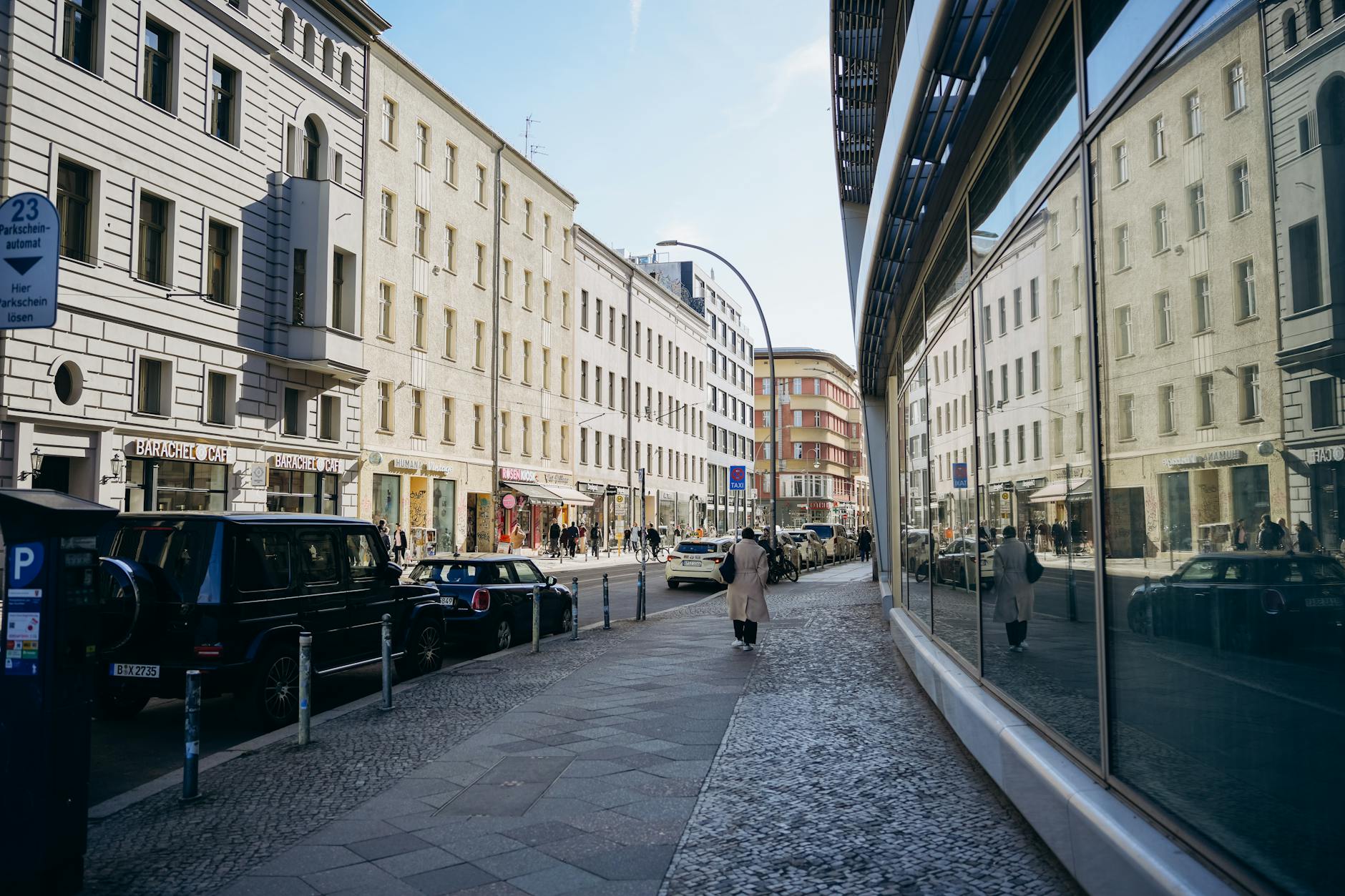
The Ku’damm is one of those streets every Berlin visitor passes through and not enough of them understand. It’s not just “Berlin’s shopping street” in some abstract sense — it’s a 3.5-kilometre boulevard with three distinct personalities, anchored at the eastern end by KaDeWe (Europe’s second-largest department store after Harrods) and bookended at the western end by the Halensee residential quarter. Walk it from end to end and you pass tourist-mall concept-store hybrids, the densest concentration of luxury fashion houses in Germany, an Apple Store, the city’s most acclaimed bookshop, a Hermès flagship on the chic parallel street, and several century-old cafés that still pull crowds. This is a guide to Kurfürstendamm and KaDeWe for 2026 — a real walking tour of West Berlin’s shopping mile with addresses, opening hours, and the practical etiquette no one tells you about (Sunday closures, tax-free shopping, when to go).
Why the Ku’damm Matters
Bismarck commissioned the boulevard in 1875 as Berlin’s answer to the Champs-Élysées. It opened to traffic in 1886, became Weimar Berlin’s intellectual centre in the 1920s (Romanisches Café, the Eldorado cabaret on Motzstrasse nearby), suffered catastrophic Allied bombing in 1943, and reopened in 1950 as West Berlin’s “shop window of capitalism” during the Cold War. The KaDeWe department store, opened by Adolf Jandorf in 1907 at Wittenbergplatz, became the West’s commercial symbol — a department store the East could not match. After reunification the Ku’damm lost some of its shine to Friedrichstrasse and Mitte; in the 2010s it staged a quiet revival, partly thanks to the OMA-designed Bikini Berlin concept mall (2014) and the ongoing KaDeWe renovation led by Rem Koolhaas. In 2026 it’s neither the only luxury street in Berlin nor the cheapest, but it’s still the one that defines the city’s commercial identity.
The Three Zones of the Ku’damm
Most travel guides describe the Ku’damm as one street. In practice it has three distinct shopping zones that suit different visits.
East — Breitscheidplatz / Bikini Berlin Cluster
The eastern terminus, around Breitscheidplatz and the Kaiser-Wilhelm-Gedächtniskirche (Memorial Church). This is where most travellers arrive — S-Bahn and U-Bahn Zoologischer Garten put you here. Bikini Berlin concept mall (Budapester Strasse 38–50, opened 2014) anchors this end with curated independent brands, design stores, and the famous Monkey Window — a floor-to-ceiling viewing pane on the third floor that looks directly into the Berlin Zoo’s monkey enclosure, free of charge. KaDeWe is a 10-minute walk south to Wittenbergplatz (U1, U2, U3). The Bahnhof Zoo area itself is less polished than it once was but practical: ATMs, fast food, transit hub.
Central — The Luxury Core (Uhlandstrasse to Olivaer Platz)
The middle 1.5 kilometres is the dense luxury zone. International brands cluster here — Louis Vuitton, Gucci, Prada, Bvlgari, Cartier, Tiffany, plus the German labels (Karl Lagerfeld at Kurfürstendamm 38). The Apple Store Kurfürstendamm is on this stretch. Cafés along the boulevard charge €5–7 for a coffee but the people-watching justifies it. The Story of Berlin museum at Kurfürstendamm 207–208 closed in 2023 — older guides still recommend it; skip it. Café Kranzler’s rotating red-and-white striped awning at Kurfürstendamm 18 remains an icon; the current operator runs it as an event and coffee space.
West — Halensee Residential End
Past Olivaer Platz the Ku’damm thins out into a more residential, antique-and-vintage stretch ending at Rathenauplatz and Halensee S-Bahn. Quieter, with smaller speciality boutiques. Locals shop here. Skip this end unless you have a specific antique or vintage destination.
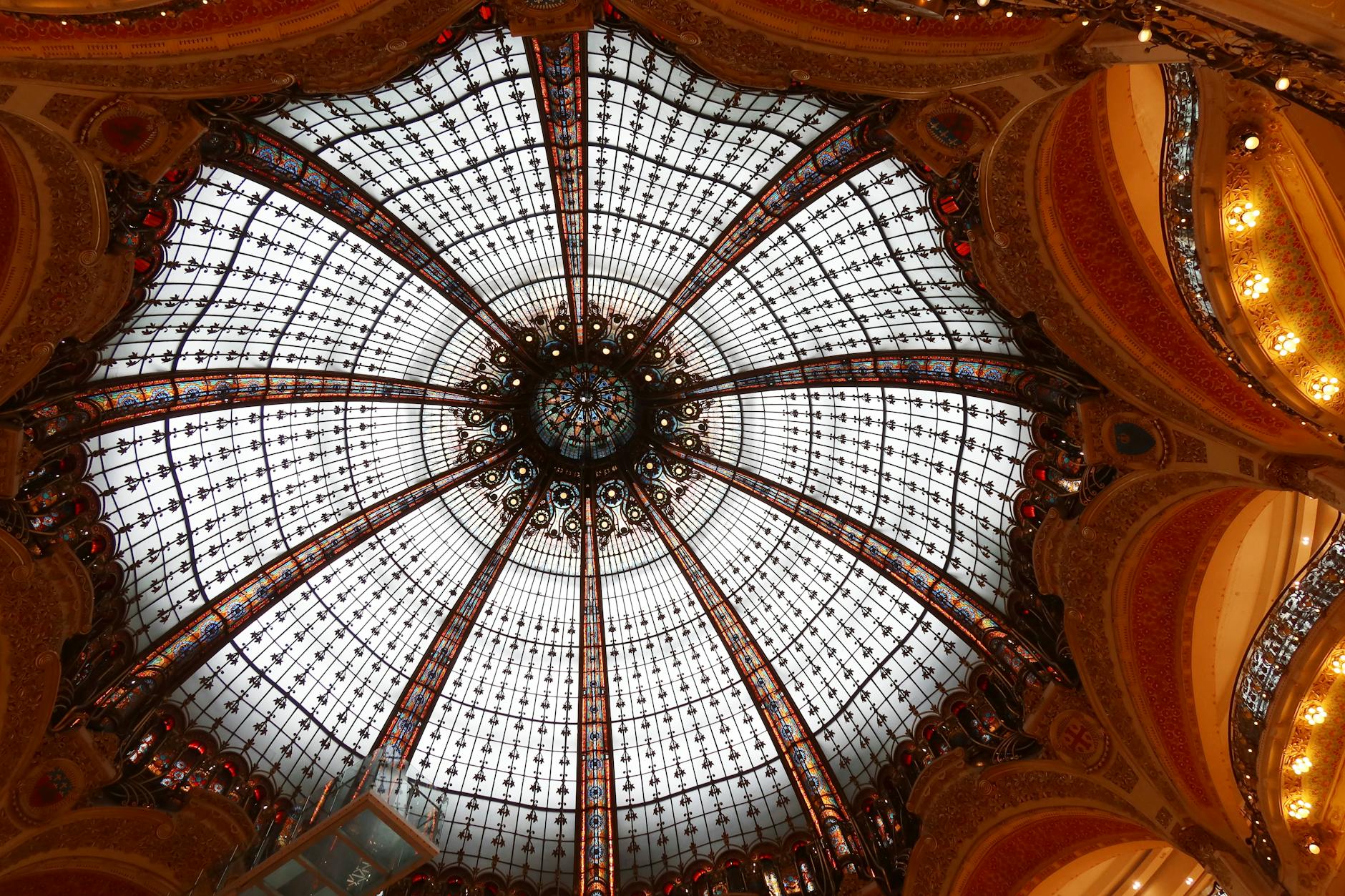
KaDeWe — Europe’s Second-Largest Department Store
Tauentzienstrasse 21–24, 10789 Berlin (at Wittenbergplatz) · Mon–Sat 10:00–20:00 · closed Sundays · U1, U2, U3 Wittenbergplatz.
KaDeWe — Kaufhaus des Westens, “the Department Store of the West” — opened in 1907 and is, after Harrods in London, the largest department store in Europe. Seven floors of merchandise, 60,000 square metres of retail, 400,000 individual items, and 40,000–50,000 visitors a day (closer to 100,000 in pre-Christmas weeks). The current Rem Koolhaas / OMA renovation, ongoing in phases from 2020 through the mid-2020s, has reshaped the building with cut-through voids, new escalator geometries, and an India Mahdavi–designed women’s designer floor.
Floor by Floor
- Ground floor: beauty, cosmetics, perfumery — the busiest floor.
- 1st floor: women’s fashion (designer brands).
- 2nd floor: men’s fashion.
- 3rd floor: shoes and accessories.
- 4th floor: home and living.
- 5th floor: sports, books, and toys.
- 6th floor: the famous Feinschmecker-Etage — the gourmet food hall. 100+ counters: oysters, caviar, French cheeses, German Wurst, Casa Beef steakhouse, Champagnerbar, Moët & Chandon Bar, Lutter & Wegner wine bar, Laggner Schwemme, sushi, Italian, Turkish — the gastronomic centre of Berlin’s luxury shopping.
- 7th floor: La Boheme glass-dome winter garden restaurant — the building’s panoramic crown.
Closed Sundays per German law. Best time to visit: weekday afternoons (the 6th floor lunch crowd is interesting but seats are tight); avoid Saturdays.
KaDeWe — A Brief History
The history is worth knowing because it makes the building feel different when you walk in. Adolf Jandorf, a German-Jewish department store entrepreneur, opened KaDeWe on March 27, 1907, at the then-edge of Wilhelmine Berlin. The seven-storey building was the largest department store in continental Europe and a deliberate showcase of bourgeois consumer modernism. Jandorf was forced to sell the business under economic duress in 1926–27, before the Nazi era’s full Aryanization wave; the Hertie family acquired it. WWII bombing destroyed most of the structure in 1943. The store reopened in 1950 in a slow phased rebuild and became, through the entire Cold War, the most visible commercial expression of the Western alliance in divided Berlin — the “shop window of capitalism” routinely cited by both sides. The 1991 fire (a kitchen accident on the sixth floor) caused significant damage; the rebuild restored the gourmet hall to its current splendour. The ongoing Rem Koolhaas / OMA renovation since 2020 is the most ambitious architectural reworking since the postwar rebuild. By the time the renovation completes mid-2020s, KaDeWe will be a different building inside its original 1907 envelope — a useful argument that even the most established Berlin institutions are constantly reinvented.
Charlottenburg Walk — Pairing the Ku’damm with the West
If you want to make a day of the Ku’damm rather than just a shopping detour, the natural pairing is the surrounding Charlottenburg district. A workable route: start at KaDeWe and Wittenbergplatz, walk west along Tauentzienstrasse and the Ku’damm to Uhlandstrasse, detour north to Fasanenstrasse for the Hermès / Literaturhaus block, continue west on the Ku’damm to Olivaer Platz, then south to Kantstrasse for Stilwerk and the Bücherbogen at Savignyplatz. Lunch in one of the Savignyplatz arch-restaurants. Afternoon at Schloss Charlottenburg (20 minutes’ walk further west) — the baroque palace and gardens are open Tuesday to Sunday, palace €17 / under-18 free, gardens always free. Evening at the Berliner Philharmoniker or one of the Charlottenburg jazz clubs (A-Trane, Quasimodo). Total walking distance about 6 km — pace it across a full day with stops for coffee. See our techno clubs guide and the live music venues guide for the evening additions.
A Note on Prices
Some price benchmarks so you know what you’re walking into. Coffee on the Ku’damm: €4.50–6.50. Lunch sandwich or salad at a casual café: €10–14. KaDeWe 6th-floor sit-down lunch: €25–45. Entry-level KaDeWe gift (small KPM porcelain piece, leather goods): €40–120. Mid-range fashion piece at Karl Lagerfeld or Bvlgari: €300–800. High-end watch or Hermès Birkin: €5,000–€50,000+. The Ku’damm spans this entire range comfortably; pick your floor accordingly. For value-for-money shopping see our Mall of Berlin and Alexa guide instead.
Fasanenstrasse — The Chic Parallel Street
One of the most undervalued shopping recommendations for Berlin: walk one block north of the Ku’damm to Fasanenstrasse. The street has the city’s most discreet luxury cluster — the Hermès flagship, Chanel boutique, Villa Grisebach auction house (Germany’s leading auction house for 19th- and 20th-century art), the Literaturhaus Berlin (Wintergarten café in a 19th-century villa), the Käthe-Kollwitz-Museum, and Berlin’s quietest stretch of high-end fashion. The crowd is different from the Ku’damm’s tourist flow: locals, collectors, the Berlin upper-middle class. The Hermès store at Fasanenstrasse 25 is the address.
Bikini Berlin — The Concept Mall
Budapester Strasse 38–50, 10787 Berlin · Mon–Sat 10:00–20:00 · closed Sundays.
Not a regular mall. The Bikini Berlin building, designed in 1957 by Paul Schwebes and Hans Schoszberger, was renovated and reopened in 2014 as a concept space — 60-ish stores curated around independent brands, Berlin designers, and design-focused retail. Plus 20 wooden “pop-up boxes” in the atrium for rotating emerging designers. The Monkey Window — a floor-to-ceiling window on the third floor with a direct view into the Berlin Zoo’s monkey enclosure — is the building’s signature attraction, free, no zoo ticket required. The 7,000 m² rooftop terrace has views over the Zoo, the Memorial Church, and the Tiergarten. NENI restaurant and the Monkey Bar (run by the 25hours Hotel) are upstairs. Easy to combine with a Berlin Zoo visit. See our Zoo and Aquarium guide.
Kantstrasse — The Design Quarter
Two blocks south of the Ku’damm, Kantstrasse is a less-famous but excellent design destination. Stilwerk (Kantstrasse 17) is a three-storey design centre with furniture, lighting, and kitchen brands. Kant Garagen (Kantstrasse 126/127) is a 1929–1930 Bauhaus-era multi-storey parking garage, recently renovated as a mixed-use building with restaurants, design shops, and offices — the building itself is a Berlin architecture detail. Bücherbogen at Savignyplatz S-Bahn is one of Berlin’s most-loved bookshops (Karl Lagerfeld was a regular). Marga Schöller (Knesebeckstrasse 33) is a literary bookshop with a strong English selection. Macy’z sells designer second-hand. The Kantstrasse design crawl is a quieter half-day for visitors who like the meta-architectural side of Berlin shopping.
Beyond Shopping — What Else Is on the Ku’damm
- Kaiser-Wilhelm-Gedächtniskirche (Memorial Church) at Breitscheidplatz — the bombed church preserved as a war memorial, with a separate modern blue-glass tower next door (the New Church). Free entry to the ruined tower; the modern interior is a remarkable Cold War-era space. Combine with a stop at the 1961 modernism of the Bikini-Haus building.
- Café Kranzler (Kurfürstendamm 18) — the rotating awning over the rooftop rotunda is one of West Berlin’s icons.
- Zoo Palast cinema — heritage cinema from the 1920s, restored, premieres many German films.
- Theater des Westens (Kantstrasse 12) — Broadway-style musicals.
- Schaubühne (Kurfürstendamm 153) — the most important contemporary German theatre.
- Berlin Zoo (Hardenbergplatz 8) — five minutes from Bikini Berlin. See our Zoo guide.
- Schloss Charlottenburg — 20-minute walk west, baroque palace and gardens.
- Tiergarten park — 10-minute walk east, free Berlin park.
Practical Shopping Tips
Sunday Closures
All Ku’damm and KaDeWe shops are closed Sundays per German trading law (Ladenöffnungsgesetz). Cafés and restaurants stay open. A handful of Sundays per year (Verkaufsoffener Sonntag) are declared open — confirmed dates in 2026 are January 25 and June 21, 13:00–20:00 citywide. Tourist train-station shops at Hauptbahnhof and Zoologischer Garten stay open Sundays. Flea markets (Mauerpark Sunday) and Christmas markets in season are the other Sunday options. See our flea markets guide.
Tax-Free Shopping for Non-EU Visitors
Non-EU residents on purchases over €50.01 per receipt can request a Global Blue or Planet tax-free form at the point of sale. You’ll need your passport. The form needs to be validated by German customs at BER Airport before you check your bags — bring the goods unworn. After validation you can claim a cash refund at the airport kiosk or by mail back to your card. Effective refund is around 11–14% of the purchase price.
Card vs Cash
Larger stores (KaDeWe, Bikini Berlin, the chain brands) accept all cards including Amex. Smaller boutiques are often Girocard-only (German debit) or cash-preferred; Amex is frequently refused. Bring €40–60 in cash for the day if you’re shopping the smaller stores.
When to Visit
- Best: weekday afternoons (Tuesday through Thursday).
- Avoid: Saturday — mob scenes, particularly KaDeWe.
- Closed: Sundays (with rare exceptions).
- Pre-Christmas: Christmas markets at Breitscheidplatz, plus heavy KaDeWe crowds.
- January and June: sale seasons (Winterschlussverkauf and Sommerschlussverkauf — though these are less formal than they used to be).
Half-Day, Full-Day, and Rainy-Day Itineraries
Half-Day Ku’damm
10:00 KaDeWe at opening (ground-floor beauty, then 6th-floor coffee). 12:00 walk west along Tauentzienstrasse to the Ku’damm; browse the luxury core. 14:00 Fasanenstrasse for Hermès and the Literaturhaus café. 15:30 finish at Bikini Berlin and the Monkey Window. 17:00 either continue to Berlin Zoo next door or head back to your hotel.
Full-Day Ku’damm + Kantstrasse
Add Stilwerk, Kant Garagen, Bücherbogen at Savignyplatz, and lunch at Café am Neuen See in the Tiergarten. End at the Berliner Philharmonie if there’s a 13:00 Tuesday free lunch concert.
Rainy-Day Ku’damm
KaDeWe (a covered indoor world unto itself) plus Bikini Berlin (mostly covered) plus the Kaiser-Wilhelm-Gedächtniskirche interior plus a late afternoon at the Berliner Philharmoniker if there’s a concert. The Ku’damm’s covered options easily fill a wet day.
How to Get There
- U-Bahn: U1, U9 Kurfürstendamm. U1 Uhlandstrasse. U1, U2, U3 Wittenbergplatz (for KaDeWe).
- S-Bahn: S3, S5, S7, S9 Zoologischer Garten — the most common arrival for tourists, lands you at the east end of the Ku’damm.
- Bus: 100, 200 (the tourist buses), M19, M29, X10.
- Walking: from Brandenburg Gate, 30 minutes east-to-west through the Tiergarten.
One small additional logistics note. KaDeWe parking — the Passauer Strasse garage attached to the back of the building — has been under intermittent renovation work during the OMA project. Most visitors come by U-Bahn anyway (Wittenbergplatz station is directly below the building and connects all three lines), which is faster than driving. The Ku’damm itself has paid street parking but most travellers find it more pleasant to walk between the U-Bahn stops than fight the traffic.
Frequently Asked Questions
Is KaDeWe open on Sundays?
No. KaDeWe is closed Sundays per German trading law, with rare exceptions for declared open Sundays (Verkaufsoffener Sonntag — 2026 dates include January 25 and June 21). Otherwise Mon–Sat 10:00–20:00.
How long is the Kurfürstendamm?
3.5 km from Breitscheidplatz at the eastern end to Rathenauplatz at the western end. Easily walkable in 45 minutes one way.
Where is the luxury cluster on the Ku’damm?
The middle section between Uhlandstrasse and Olivaer Platz, plus Fasanenstrasse one block north (Hermès, Chanel) and Tauentzienstrasse to KaDeWe at Wittenbergplatz to the east.
Can tourists get a VAT refund in Berlin?
Non-EU residents on purchases over €50.01 per receipt can claim a tax-free refund via Global Blue or Planet. The form must be validated by German customs at the airport before you check bags.
What’s the difference between KaDeWe and Galeries Lafayette?
KaDeWe is on Wittenbergplatz and still operating. Galeries Lafayette Berlin was on Friedrichstrasse in Mitte but closed in August 2024 — older guides still list it; the building is undergoing repurposing.
Best time to visit the Ku’damm?
Weekday afternoons (Tuesday through Thursday). Avoid Saturday crowds. Closed Sundays.
Final Word
The Ku’damm isn’t Berlin’s most fashionable shopping address anymore — Mitte’s Hackesche Höfe and Auguststrasse have absorbed much of the cool — but it’s still the city’s commercial anchor and the easiest place to combine luxury shopping with sightseeing. KaDeWe is genuinely worth seeing if you’ve never been to Harrods. Bikini Berlin is a quieter pleasure and pairs naturally with the Zoo. Fasanenstrasse is where the real Berlin upper-middle class actually shops. Skip the tourist-mall offerings at the far western end unless you have time to spare.
Companion reads: our Mall of Berlin and Alexa guide, best flea markets guide, best souvenirs guide, and our Christmas markets guide.