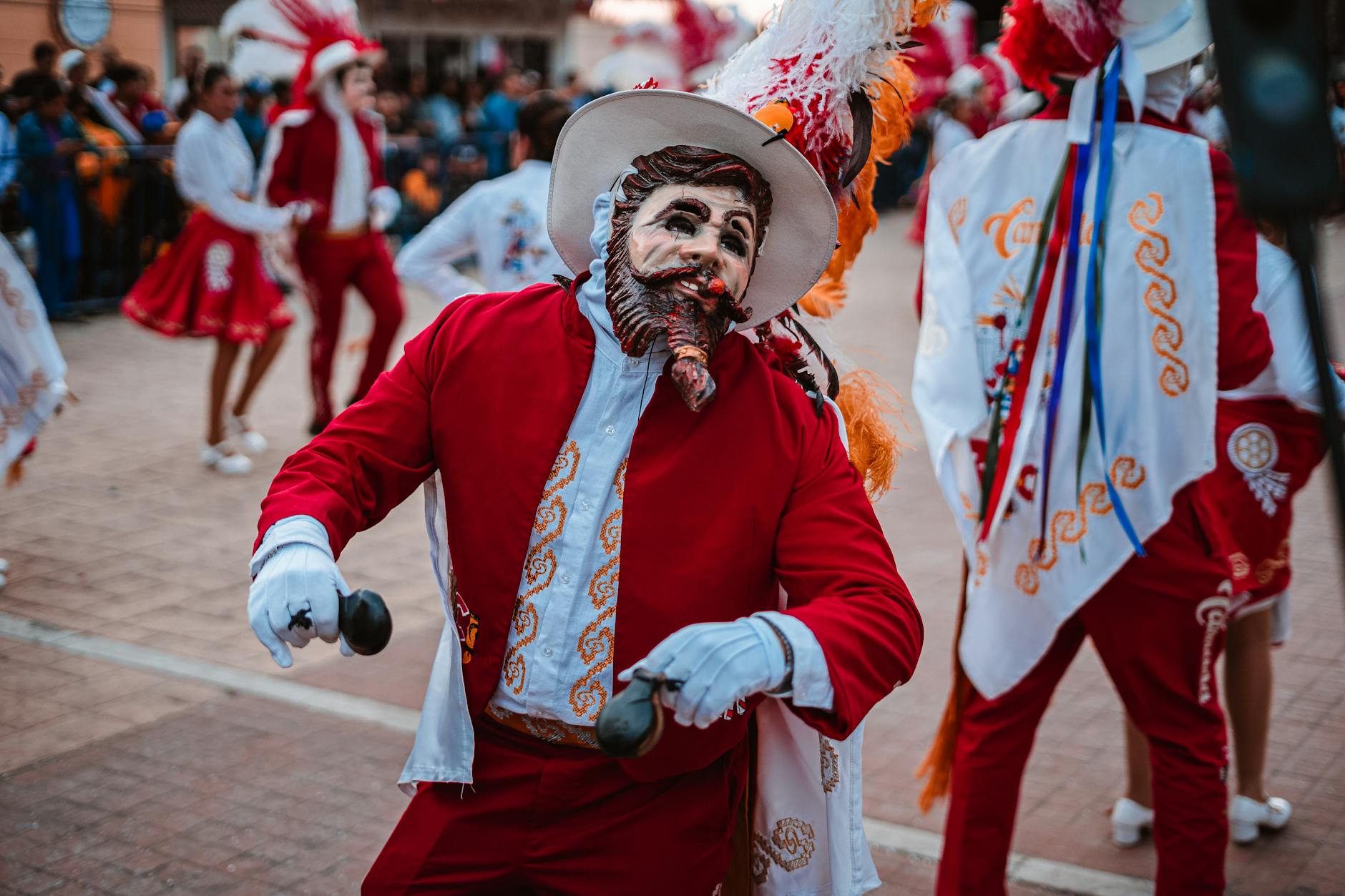
Karneval der Kulturen — the Carnival of Cultures — is the closest thing Berlin has to a true city-defining festival. Every Whitsun weekend in late May, around a million people fill Kreuzberg and Friedrichshain for four days of music, dancing, parades, and the kind of dense international street food you don’t get anywhere else in Europe. The 2026 edition (May 22-25) marked the 30th anniversary, and the parade route — which moved from its original Kreuzberg core to a longer Friedrichshain artery in recent years — still wound up at the iconic Kino International on Karl-Marx-Allee. I write this guide a day after the 2026 parade ended, with the city still smelling of grilled food, and I’m telling you now: if you’re planning a Berlin trip for next May, build it around Karneval der Kulturen.
This guide covers everything about Karneval der Kulturen for first-time visitors — what it is, when it happens, where to stand for the parade, what’s worth eating, the safety realities of dense crowds, and what to expect at the 2027 edition (which is shaping up to follow the same format and route).
Karneval der Kulturen at a Glance
| Element | Details |
|---|---|
| 2026 Dates | May 22–25 (Friday–Monday, Whitsun weekend) |
| 2026 Parade | Sunday May 24, 1:30 pm – ~10 pm |
| 2026 Parade Route | Frankfurter Allee → Karl-Marx-Allee → Kino International |
| Street Festival | Blücherplatz, Kreuzberg (Thu–Mon) |
| Attendance | ~1 million over the weekend |
| Performers | 5,000+ across 100+ groups |
| Floats | 70+ |
| Food Stalls | 350+ from 60+ nations |
| Stages | 4 main, 12 music corners |
| Cost | Free |
| Children’s Carnival | Saturday May 23, from Mariannenplatz |
What Is Karneval der Kulturen?
Karneval der Kulturen is a four-day street festival and parade celebrating the cultural diversity of Berlin’s immigrant communities. It’s not a German tradition in the sense that Cologne Karneval or Oktoberfest are — it was deliberately created in 1996 by the Werkstatt der Kulturen organization as a response to a wave of xenophobic violence in the early-1990s reunification period. The intent was to bring the city’s many immigrant communities into a single visible celebration. Thirty years later, it has succeeded enough that Karneval is genuinely one of the largest and most recognizable Berlin events of the year.
The format is influenced by Rio Carnival and London’s Notting Hill Carnival — a parade of community groups, each with their own float or costume tradition, working through a long urban route while drummers, dancers, and DJs maintain the energy. Genres range from samba schools and Turkish weddings bands to Caribbean steel drums, Korean drum corps, and entire blocks of Latin American sound systems. The total experience is impossible to describe accurately: imagine a moving festival of about 5,000 performers, with a million spectators lining a five-kilometer route.
A 30-Year History (1996-2026)
The first Karneval der Kulturen took place in May 1996, with about 50,000 attendees and a relatively small parade through Kreuzberg. The event grew steadily through the late 1990s and 2000s — by 2008 it was drawing over a million people across the weekend, making it Berlin’s largest street festival. The Kreuzberg route, which followed Yorckstrasse and Gneisenaustrasse before turning onto Hermannplatz, became iconic.
The route changed in recent years for logistical and security reasons. The Friedrichshain alternative — starting near Frankfurter Allee and following Karl-Marx-Allee to Kino International — is wider, has better crowd-control infrastructure, and accommodates the larger float assemblies the parade has grown to require. Some long-time Berliners still grumble that the parade “should be in Kreuzberg” — but the street festival at Blücherplatz keeps Kreuzberg as the festival’s permanent base, and most participants agree the new route is more parade-friendly than the old one.
The Parade — Sunday Afternoon
The parade is the festival’s centerpiece. On Sunday May 24, 2026, the procession started at 1:30 pm from the intersection of Frankfurter Allee and Proskauer Strasse / Niederbarnimstrasse in Friedrichshain. It moved west along Karl-Marx-Allee, past Strausberger Platz, ending at the forecourt of Kino International. The full route takes about eight hours from the first float to the last — the lead floats finished by mid-afternoon, the trailing groups passed Kino International around 9-10 pm.
Best vantage points: The central median strips along Karl-Marx-Allee are the most comfortable viewing spots — wide enough for crowds without being uncomfortably dense. The forecourt of Kino International is the natural finish line area, with the building’s iconic mid-century facade providing a backdrop, but it gets the most crowded as the day progresses. Strausberger Platz, midway through the route, has the most relaxed crowd. Avoid trying to view from the immediate finish — the press there is intense.
Arrive by midday if you want a decent street-level spot. The serious enthusiasts who want a clear shot of the parade from the front rows arrive by 10 am with folding chairs and supplies. For more relaxed viewing, the median strips have shaded areas that don’t reach capacity until 2-3 pm.
Street Festival at Blücherplatz
The four-day street festival runs at Blücherplatz in Kreuzberg, from Thursday through Monday of the Whitsun weekend. This is the permanent home of Karneval der Kulturen — the parade moves between neighborhoods, but the street festival has been at Blücherplatz for years. It’s where the food, the music stages, and the daytime crowd concentrate.
Hours: Friday opens at 17:00, Saturday and Sunday 12:00-23:00, Monday closes around 18:00. Free entry. The festival has four main stages programming live music, DJ sets, and dance performances throughout each day, plus twelve smaller “music corners” run by community groups. The food stalls — 350+ representing more than 60 nations — are the densest international street food experience in Europe.
Getting there: U1, U3, or U6 to Hallesches Tor, which is right at the edge of the festival site. The U7 to Mehringdamm puts you a five-minute walk away.
The Children’s Carnival
The Karneval der Kulturen Kinderkarneval — Children’s Carnival — runs on Saturday before the main parade. The 2026 edition started at noon from Mariannenplatz in Kreuzberg, with a shorter parade route designed for families and a children’s program throughout the afternoon at Görlitzer Park. The 2026 motto was “VIVA EL AXOLOTL — FOREVER YOUNG!” — each year has a different child-oriented theme.
The Children’s Carnival is genuinely family-friendly in ways the main Sunday parade isn’t. Smaller crowds, scheduled around toddler-friendly daytime hours, food stalls catering to kids, and supervised activity areas. If you’re traveling with young children, prioritize Saturday over Sunday for the parade experience. We cover Berlin family-friendly events in detail in our Berlin with kids guide.
Food and Drink at Karneval
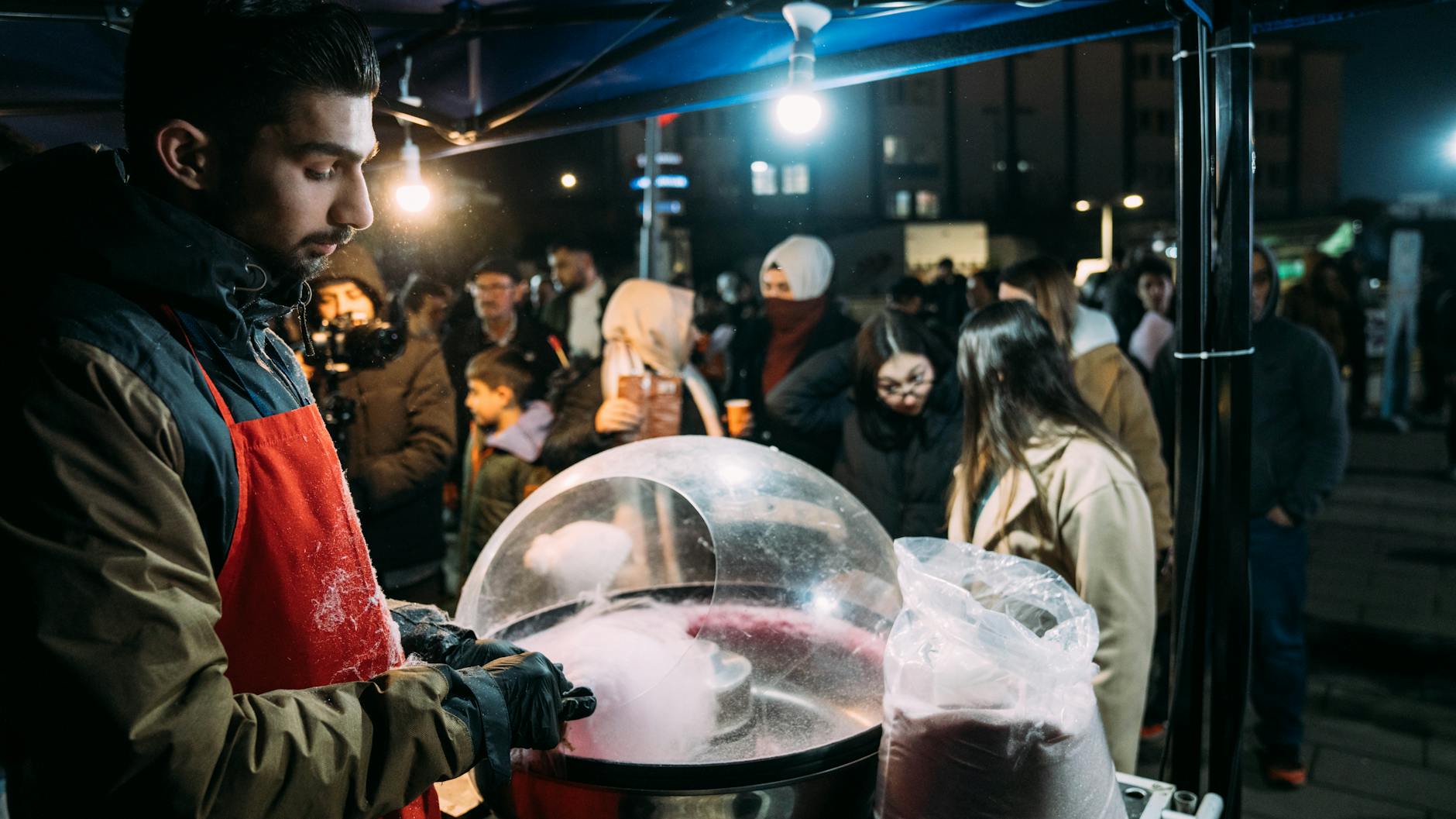
The food is one of the genuine pleasures of Karneval der Kulturen. The 350+ stalls represent immigrant communities from across the world — and most are run by community groups, not commercial food vendors. The quality is consistently higher than typical street festivals because the cooks are often family members representing their cultures rather than professional food-truck operators.
What to look for: West African jollof rice and grilled fish, Vietnamese phở and banh mi from the Berlin Vietnamese community, Turkish gözleme and pide that you won’t find at the standard Turkish Market, Eritrean injera with stews, Caribbean curries, Korean street food, Polish pierogi from the substantial Berlin Polish community, Senegalese yassa, and Italian arancini from the city’s substantial Italian community. Prices run €5-12 per dish. Most stalls accept only cash.
Drink: beer (€3-5), wine, mojitos, fresh tropical juices. Many of the music corners have dedicated bars; the main stages have full bar service. Bring water — the dense crowds and the May heat (often the warmest weekend of the year so far) combine to dehydrate people faster than they expect. The Karneval crowd is generally well-behaved but pickpocketing in dense areas is a known risk.
Getting There — Transit and Closures
Heavy public transport disruptions during the parade day. Karl-Marx-Allee and surrounding streets are closed to traffic from early Sunday morning through late Sunday evening. The U-Bahn runs normally on most lines, but several Friedrichshain stations near the parade route experience surge crowds — Frankfurter Tor, Weberwiese, Strausberger Platz, and Schillingstrasse all see major traffic.
For the parade, the most reliable approach is to arrive by U-Bahn at one of the stations along the route and walk to a viewing spot. For the Blücherplatz street festival, U1/U3/U6 to Hallesches Tor is your best bet. Don’t drive anywhere near central Berlin during the weekend — large portions of central Mitte, Kreuzberg, and Friedrichshain are restricted. Taxis can struggle to navigate the closures.
Day tickets (€9.50) cover the whole network. Buy in advance to avoid the surge queues at major U-Bahn stations.
Practical Safety and Crowd Tips
Karneval der Kulturen is generally safe but it’s the largest street festival in Berlin, and the safety rules of any major dense-crowd event apply. Carry minimal cash and use a front-facing bag or money belt — pickpocketing is the most reported issue. Avoid bringing valuables you’d be devastated to lose. Children should have a written contact card with parent phone numbers in case of separation (most lost-kid reunifications happen via the central police tent at Blücherplatz).
Hydrate. Use sunscreen — the May sun can be deceptively strong, and crowd density blocks airflow. Wear comfortable walking shoes; you’ll do far more standing than you expect. If you’re sensitive to noise, the immediate vicinity of the parade route hits 110+ decibels at peak — ear protection isn’t excessive.
Where to Stay for Karneval Weekend
Karneval weekend is one of the highest-demand Berlin hotel weekends of the year alongside Marathon and NYE. Book by early March at the latest for the best prices and selection. Kreuzberg and Friedrichshain put you walking distance from both the parade and the street festival; Mitte is a fifteen-minute U-Bahn ride. Avoid the West Berlin hotel cluster if Karneval is your primary reason for the trip — you’ll spend too much time on the U-Bahn. Our budget hotels guide covers options across price ranges.
Karneval der Kulturen vs. Cologne and Rio Carnivals
People sometimes ask how Berlin’s Karneval compares to the more famous Cologne Carnival (Kölner Karneval) or the Brazilian original. The answer: it’s its own thing. Cologne Carnival is February-based, Catholic-tradition, themed around costume parties in the days before Lent. Rio Carnival is similarly pre-Lenten, much hotter and larger, and built around competitive samba schools. Berlin’s Karneval der Kulturen is May, post-Lent, secular, deliberately multicultural rather than rooted in any single tradition. The Berlin event is more of a community celebration and less of a competitive cultural performance than Rio’s, and significantly more diverse than Cologne’s.
2027 Outlook
The 2027 Karneval der Kulturen is expected to follow the same Whitsun weekend timing — likely the weekend of May 14-17, 2027 (Whitsun 2027 falls on May 16). The Werkstatt der Kulturen organization typically confirms dates by the previous September. The Friedrichshain parade route worked well enough in 2025 and 2026 that it’s likely to repeat, though minor route adjustments happen most years.
Frequently Asked Questions
When is Karneval der Kulturen 2026?
May 22-25, 2026. Street festival at Blücherplatz Thursday-Monday; parade on Sunday May 24 from 1:30 pm starting at Frankfurter Allee in Friedrichshain. 30th anniversary edition.
Is Karneval der Kulturen free?
Yes, entirely free. The street festival at Blücherplatz, the Sunday parade, and the Children’s Carnival on Saturday are all free to attend. Food and drink are paid (€5-12 per dish typical). No tickets required.
Where does the parade start in 2026?
The 2026 parade starts at 1:30 pm at the intersection of Frankfurter Allee and Proskauer Strasse / Niederbarnimstrasse in Friedrichshain. The route follows Karl-Marx-Allee westward, finishing at Kino International. The parade lasts approximately 8 hours from start to last float.
Is Karneval der Kulturen still in Kreuzberg?
The street festival is still in Kreuzberg, at Blücherplatz, where it has been for years. The parade route was relocated to Friedrichshain along Karl-Marx-Allee in recent years for logistical reasons — wider streets, better crowd-control infrastructure. The festival’s identity remains Kreuzberg-anchored.
How do I get there with public transport?
For the Blücherplatz street festival: U1, U3, or U6 to Hallesches Tor (right at the festival edge), or U7 to Mehringdamm (5-minute walk). For the parade: U5 along Karl-Marx-Allee to any of Frankfurter Tor, Weberwiese, Strausberger Platz, or Schillingstrasse. Expect very crowded stations on the parade day.
Is it family-friendly?
Yes during the day. The Saturday Children’s Carnival from Mariannenplatz is specifically designed for families, with smaller crowds and a kid-appropriate program. The main Sunday parade is family-friendly during daylight hours but becomes more adult and densely crowded as the evening progresses. Bring stroller-friendly routing in mind — sidewalks get packed.
What should I watch out for?
Pickpocketing is the most reported issue — carry minimal cash, use a front-facing bag or money belt. Avoid bringing valuables. Hydrate; the May sun and crowd density combine to cause heat exhaustion if you’re not careful. Children should have a written contact card. Use the official police tent at Blücherplatz for any incidents or lost-child situations.
Final Word
Karneval der Kulturen is the Berlin festival I’d send a first-time visitor to before any other. It captures something the museums, the techno clubs, and the major sights individually don’t — the version of Berlin that’s actually a place where a million people from a hundred countries live together, and where they organize a free weekend every May to remind the city of that fact. Bring an empty stomach, a working pair of walking shoes, a small amount of cash, and the willingness to spend twelve hours moving through crowds. The whole experience earns the city’s love every year it happens.