Best Techno Clubs in Berlin: 15+ Must-Visit Venues (2026)
Updated 2026 guide to Berlin's best techno clubs — Sisyphos, Tresor, Kater, RSO, About Blank, Mensch Meier and more. Watergate is closed.
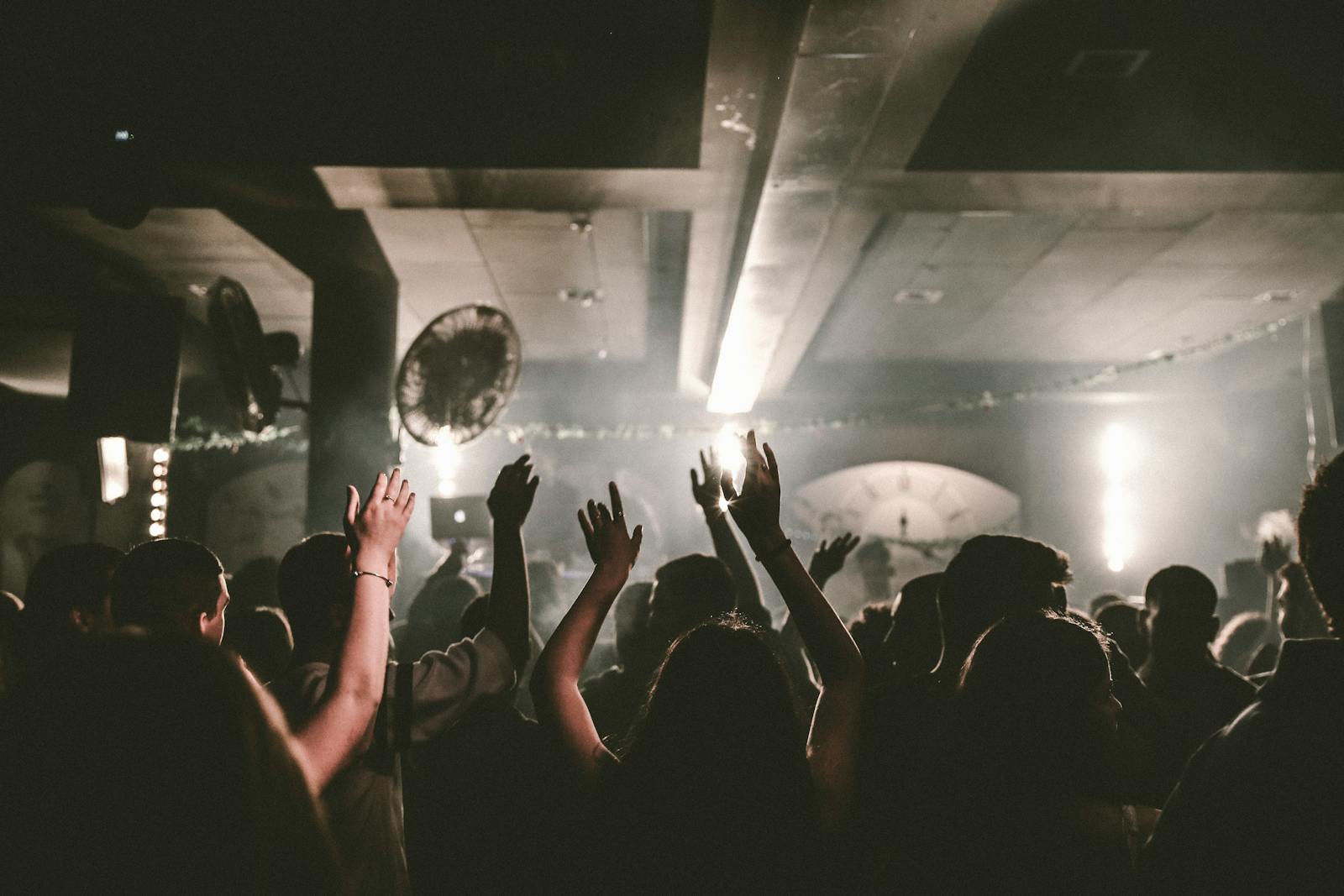
The Berlin techno club map has changed more in the last 24 months than it did in the previous decade. Watergate closed on New Year’s Eve 2024 after twenty-two years on the Spree. Salon zur Wilden Renate held its 86-hour farewell party in early January 2026. Suicide Circus quietly rebranded as Lokschuppen at the start of 2024 and Kater Blau dropped the “Blau” in 2025. Meanwhile UNESCO added Berlin’s techno scene to the Intangible Cultural Heritage list in 2024, and a new generation of clubs — RSO, OXI, MAAYA, Lokschuppen — has reorganised the geography. So if you’ve come to Berlin with a list of best techno clubs that’s more than a year old, throw it out. Here’s what’s actually open in 2026, ranked and grouped not by hype but by what you’d actually want from a night.
A note on what I’ve left out. I’ve written a separate detailed guide to Berghain because it deserves its own piece. I’ve also left out venues that have closed or that have stopped functioning as techno clubs in any meaningful sense. What follows is the working list as of mid-2026, organised by what kind of night you’re chasing.
The Legendary Big Rooms
Berghain / Panorama Bar / Säule (Friedrichshain)
Am Wriezener Bahnhof · Saturday 23:59 to Monday morning · €25–€30 · Door difficulty: 5/5. The world’s most famous techno club, in a converted East Berlin power plant. Three rooms — hard techno on the main floor, house upstairs at Panorama Bar, experimental at Säule — plus the Halle annex for special events. Read the dedicated Berghain guide for the full breakdown.
Tresor / Globus / OHM (Mitte)
Köpenicker Strasse 70 · Wednesday and Friday–Sunday · €20–€30 · Door difficulty: 3/5. Tresor opened in March 1991 in the basement vault of the bombed-out Wertheim department store on Leipziger Strasse — one of the first post-Wall techno clubs anywhere — and relocated in 2007 to its current home in a former Vattenfall power station on Köpenicker. The basement Tresor floor (named after the safe-deposit vault) plays the hardest, most uncompromising techno in the city: low ceilings, sweat condensing on the walls, a sound system that punishes. Upstairs, Globus plays house and warmer dance music. OHM, a separate venue in the same complex, programmes more experimental electronic and queer-leaning nights. If you want the historical home of Berlin techno, this is it.
Sisyphos (Lichtenberg)
Hauptstrasse 15 · Friday evening to Monday afternoon, continuous · €18–€25 · Door difficulty: 3/5. A festival hidden in a former dog-biscuit factory in deep East Lichtenberg. Multiple stages indoors and out, a pond with swimming in summer, treehouses, a wood-fired pizza station, art installations everywhere, and a marathon weekend programme that runs without pause from Friday night to Monday afternoon. The vibe is more friendly than Berghain — door staff prefer to see groups of friends having fun, the dress code is looser, and the music ranges from melodic house to deeper techno. Sunday afternoon at Sisyphos, with the pond open and the sun setting over the woods, is one of Berlin’s defining experiences. Easier to enter than Berghain but not effortless — be sober and small-group.
KitKatClub (Mitte)
Köpenicker Strasse 76 / Brückenstrasse 1 · Friday–Sunday · €20–€25 · Door difficulty: 4/5 (dress code). Berlin’s most famous sex-positive club, opened in 1994. Pool, swings, multiple dance floors, and a strict fetish dress code on most nights — leather, latex, vinyl, lingerie, harnesses, or full nudity all welcome; jeans and t-shirts not. Monday’s Electric Monday party is the exception with a more relaxed code. The crowd is queer, mixed, sex-positive, and not for tourists looking to gawk. Cash only at the door. If you go, go for the right reasons.
Underground and Industrial Heavyweights
RSO.Berlin (Schöneweide)
Schnellerstrasse 137 · Friday–Sunday · €15–€25 · Door difficulty: 3/5. The successor to the much-loved Griessmühle, which closed in 2020. RSO.Berlin opened in 2021 in a large industrial space in Schöneweide, deep south-east of the city — ROBUS and SUMME indoor rooms, the OPAN open-air courtyard in summer, and a custom Kirsch sound system that’s among the most respected in the city. Marathon weekends, deep techno programming. The location is remote enough to keep the crowd local and serious.
Lokschuppen (formerly Suicide Circus, Friedrichshain)
Revaler Strasse 99 (RAW Gelände) · Friday–Sunday · €15–€20 · Door difficulty: 2/5. The club rebranded from Suicide Circus to Lokschuppen on January 1, 2024 — same RAW Gelände location, same trance-and-techno programming, friendlier name. Open-air courtyard in summer, indoor floor year-round. Easy door, central location, ideal for first-timers. See our RAW Gelände guide for the wider context of this complex.
OST (Friedrichshain)
Alt-Stralau 1 · Saturday–Sunday · €15–€25 · Door difficulty: 3/5. A former GDR power substation on the Rummelsburg side, opened as a club in 2022. Brutalist architecture, raw concrete, harder techno, a small but devoted following. Currently in the path of the proposed A100 motorway extension — the same threat hanging over ://about blank, OXI, and others — which adds urgency to visiting now.
Anomalie Art Club (Prenzlauer Berg)
Storkower Strasse 123 · Friday–Sunday · €15–€20 · Door difficulty: 3/5. Art installations and projections plus techno. A more visually-driven club than most, with rotating exhibitions and an emphasis on multimedia. The crowd is slightly younger and more eclectic. Neighbours Mensch Meier on the same strip.
Queer and Leftist Collectives
://about blank (Friedrichshain)
Markgrafendamm 24c · Thursday–Sunday · €15–€18 · Door difficulty: 3/5. A queer-feminist political collective with an all-female team and an explicit anti-fascist programme. The garden in summer is one of the loveliest spots in Berlin — small, leafy, with proper trees and string lights — and the techno programming is consistently strong. The door is selective in a different way from Berghain: the politics matter, the queue vibe matters, and dressing or behaving like a tourist will hurt you. Treat it with respect, arrive after 02:00, and you’ll likely get in.
Mensch Meier (Prenzlauer Berg)
Storkower Strasse 121 · Friday–Sunday · €15 · Door difficulty: 2/5. A collectively-run queer techno club with a strict no-photography policy, an active awareness team, and a politically engaged programming style. The crowd is younger and more committed to the scene than at the big names; the vibe is welcoming if you’re aligned with the politics.
OXI (Friedrichshain)
Friedrichshain (Stralauer Allee area) · Friday–Sunday · €15 · Door difficulty: 3/5. Queer collective, Lambda Labs sound system, a beautiful terrace, and a programme that leans harder and more political. Like OST and ://about blank, OXI sits in the path of the planned A100 motorway extension — visit while you can.
Riverside and Open-Air (Summer Only)
Club der Visionaere (Treptow)
Am Flutgraben 1 · May–September, daily · €10 or free before 21:00 · Door difficulty: 1/5. A small wooden hut on the Flutgraben canal, with deck chairs over the water and a sound system that punches well above the venue’s modest size. Day-drinking into dancing. Friendly door, summer-only operation. Reopened in fully restored form after the 2019 fire. The sister venue Hoppetosse — a boat moored on the Spree at Arena — picks up the winter slack.
Kater (formerly Kater Blau, Friedrichshain)
Holzmarktstrasse 25 · Thursday–Sunday · €15–€20 · Door difficulty: 2/5. The friendliest of the big-name clubs, on the Holzmarkt riverside complex. Multiple indoor and outdoor floors, melodic house and tech-house programming, a beachy terrace on the Spree in summer, riverbank seating, food carts, and a forgiving door policy. Recently rebranded simply as Kater in 2025. Excellent first-club for a Berlin newcomer; many regulars stick to it as their default.
Else (Treptow)
An den Treptowers 10 · May–September, Saturday and Sunday only · €10–€15 · Door difficulty: 2/5. The summer-only outdoor venue from the Watergate team. Shipping-container architecture, willow trees, a small dance floor, and a sun-drenched Spree-side terrace. Pre-fire Watergate’s spiritual successor.
Birgit&Bier / ÆDEN (Kreuzberg)
Schleusenufer 3 · May–September · €10–€15 · Door difficulty: 1/5. An outdoor canal-side complex with multiple dance floors hidden in trees, beer-garden seating, and a deliberately carnival vibe. ÆDEN is the new spring-into-summer programme on the same site. Door is forgiving, music ranges from disco to harder techno depending on the night.
Zenner (Treptower Park)
Treptower Park · Summer–autumn · €10–€20 · Door difficulty: 2/5. A restored GDR-era ballroom that now runs electronic events alongside a beer garden, restaurant and outdoor dance floor overlooking the Spree. The architecture is a Cold War relic — well worth seeing.
Easy-Door Alternatives for First-Timers
If you’re new to Berlin nightlife and don’t want a rejection on your first night, these are the most forgiving doors with strong programming. See our first-timer’s guide for the full primer.
- Ritter Butzke (Ritterstrasse 24-27, Kreuzberg) — three floors, multiple genres, very welcoming. €20–€25.
- Cassiopeia (RAW Gelände, Revaler Strasse 99) — almost no door selection, drum and bass to techno to hip-hop.
- Crack Bellmer (RAW Gelände) — small, daytime and night, inclusive vibe.
- Golden Gate (Schicklerstrasse 4, Mitte) — tiny club under a railway bridge, cult favourite, easier than the big names. €15–€20.
- Fitzroy (Holzmarktstrasse 15-18) — eclectic programming, friendly, not purely techno.
In Memoriam — Recently Closed
If a guide on the internet recommends any of the following, the guide is out of date.
- Watergate — closed December 31, 2024 after 22 years on the Schlesischen Brücke. Landlord didn’t renew the lease.
- Salon zur Wilden Renate — closed January 4, 2026 after an 86-hour farewell party. Eighteen years in a sprawling apartment complex on Alt-Stralau.
- Griessmühle — closed 2020, succeeded by RSO.Berlin.
- Suicide Circus — rebranded as Lokschuppen, same location and programming.
- Magnet Club — closed.
- SchwuZ — left its Rollbergstrasse location in 2025 after financial difficulties, now operates as a travelling party series.
The pattern is not coincidental. The German trade press calls it Klubsterben — club death. Padovicz, a Berlin real-estate group, has been the landlord behind several closures (Watergate, Renate). The proposed A100 motorway extension threatens ://about blank, OXI, OST and Renate’s eastern neighbours. The Berlin Clubcommission warned in 2024 that as many as 46% of the city’s clubs were at risk of closure within twelve months. This isn’t an ordinary boom-and-bust nightlife cycle; it’s a structural fight between commercial real estate and cultural space.
How to Read a Berlin Club Door
Some things hold across most clubs in this list. Dress dark, comfortable, unbranded. Go in pairs or threes, not fives. Stay quiet in the queue. Don’t drink in line. Don’t take selfies. Have ID — passport or EU ID — ready before the bouncer asks. Speak softly in either language. If they ask who’s playing tonight, name a current DJ from the lineup, not a headline name from last month. If you’re rejected, don’t argue — try another club. For a thorough breakdown, our club etiquette guide covers everything from phone stickers to coat check tipping.
When to Arrive and the Klubnacht Arc
Forget what nightlife means at home. Most Berlin clubs don’t fill until 02:00. Peak is 04:00–07:00. Berghain Klubnacht runs Saturday 23:59 to Monday morning continuously. Sisyphos opens Friday evening and runs to Monday afternoon non-stop. The Sunday-afternoon-to-evening window is a Berlin specialty — you can roll into Kater or Sisyphos in daylight, dance for a few hours, and be home for a normal Sunday dinner. If you only have one night, sleep all day Saturday, eat dinner at 22:00, and start your night at 01:00. You’ll be in time.
Frequently Asked Questions
What’s the best techno club in Berlin besides Berghain?
Tresor for the purist underground experience, Sisyphos for the festival vibe and friendlier door, ://about blank for the queer-leftist scene, RSO for the deep marathon programming. There’s no single answer because the question is really about what you want from the night.
Where’s the easiest Berlin techno club to get into?
Ritter Butzke, Cassiopeia, Kater, Club der Visionaere (summer), Birgit&Bier (summer), and Lokschuppen all have welcoming doors and shouldn’t reject anyone who’s not visibly drunk or in a large group.
What time do Berlin clubs start filling up?
1:00 to 3:00 on Friday and Saturday. Peak is typically 4:00 to 7:00. Sunday afternoon parties at Sisyphos and Kater fill from late morning onwards.
Are there Sunday parties in Berlin?
Yes — Berlin’s defining feature. Berghain Klubnacht runs Sunday into Monday. Sisyphos and Kater both have famous Sunday daytime parties. Club der Visionaere is daytime and open every day in summer. Hoppetosse in winter.
How much does a Berlin techno night cost?
Entry €15–€30 depending on the club and lineup. Beer €4–€5, water €2.50–€4, mixed drinks €8–€12. Realistic total: €50–€100 per person depending on stamina. Most clubs still prefer cash at the door.
Can I take photos in Berlin clubs?
No. Berghain, ://about blank, Sisyphos, Mensch Meier, KitKat, Tresor, and most serious clubs sticker your phone cameras at the door. The no-photo rule is non-negotiable.
What should I wear?
Dark colours, comfortable clothing for hours of dancing, broken-in sneakers or boots. No logos, no group costumes, no heels. KitKat is the exception with its mandatory fetish dress code.
Is Berlin techno scene dying?
It’s changing. Several long-standing clubs have closed (Watergate, Renate, Magnet), and the Clubcommission warned in 2024 that up to 46% of clubs faced closure within twelve months. At the same time, UNESCO added Berlin techno to the Intangible Cultural Heritage list in 2024 and new collectives — RSO, OXI, OST, MAAYA — keep opening. The scene is contracting and reorganising, not dying.
A Short History of Berlin Techno
The scene didn’t appear out of nowhere. Berlin techno is the cultural product of a specific historical accident: a city reunified in 1990 with a massive supply of empty East-side industrial buildings, no clear ownership for many of them, almost no functioning real-estate market, and a young population from both halves of the city looking for somewhere to throw a party. The first wave of clubs — UFO, Tresor (1991, in the bank vault on Leipziger Strasse), Planet, E-Werk (1993, in a former power station on Wilhelmstrasse), WMF (1991, rotating locations) — opened in spaces that had been state property six months earlier. The sound itself was imported from Detroit and Chicago, then mutated by Berlin producers like Tanith, Wolle XDP, and the early Tresor roster into something darker, harder, and built for very long nights.
The Love Parade — Dr. Motte’s 1989 demonstration that grew into a million-person street rave by 1999 — marked the moment Berlin techno went global. Berghain opened in December 2004 in the post-Ostgut continuity. The 2010s saw the scene professionalise, internationalise, and tourist-ify. The 2020s have been a reckoning: COVID closures, rising rents, the slow loss of cheap space, the closures of Watergate and Renate, and the UNESCO recognition of 2024 that arrived simultaneously with the structural crisis. The story is still being written.
Music Sub-Genres — What You’ll Actually Hear
“Techno” is the catch-all but each club has a sound. Knowing the difference helps you pick the right night.
- Berlin techno (130–138 BPM): hard, dubby, low-end weight, long sustained mixes. The Berghain main floor and Tresor basement are the canonical rooms.
- Hard techno (140–155 BPM): the louder, faster strain that has surged in popularity since 2022, often crossing into trance and gabber influences. Heard at Lokschuppen, OST, some OXI nights.
- Minimal / micro-house: Romanian-influenced, sparse, percussive. Kater and Club der Visionaere lean this way.
- House / electro / disco: Panorama Bar’s terrain, plus most of Club der Visionaere, Birgit&Bier, ÆDEN, and the Sunday daytime parties.
- Experimental / ambient / live: Säule at Berghain, OHM at Tresor, Anomalie, ://about blank’s quieter nights.
- Trance: Lokschuppen’s specialty.
How to Find Out What’s On
Berlin’s listings ecosystem rewards a small amount of pre-trip homework. Resident Advisor (ra.co) is the primary global techno listings site and covers most of the clubs on this page — search by city and date, then click into individual events for full lineups and ticket links where applicable. tip Berlin and Berlin At Night publish weekly weekend round-ups. Most clubs also post their lineups on Instagram a week or two ahead; club Instagram handles include @berghain_ostgut, @tresorberlin, @sisyphos_berlin, @aboutblank_official, @katerberlin, @ritterbutzke, @rso.berlin. The lineup quality on any given weekend varies wildly — checking who’s playing turns a generic Berlin weekend into something specific.
For tickets: most Berlin clubs don’t pre-sell entry — you queue and pay at the door. The exceptions are special events (Berghain Halle concerts, festival weekends, sold-out names) which sell tickets in advance via the club’s own site or RA. Even Berghain Klubnacht is door-only.
Continuing the Story
Three reads to pair with this one. Berghain deserves its own deep dive — start there if it’s on your list. RAW Gelände is the cluster of clubs and venues — Cassiopeia, Lokschuppen, Astra, Urban Spree, MAAYA — packed into a single old railway compound in Friedrichshain. And our first-timer’s nightlife guide answers the practical questions this list assumes you’ve already worked out: when to arrive, where to pre-game, how to get home, how to dress, and what to do if you get turned away. For LGBTQ+ readers and queer travellers, the LGBTQ+ nightlife guide is the right companion piece.
Go see at least one of these clubs while the geography still looks like this. The map shifts every six months in Berlin, and a few of the venues I’ve listed here may not be on the list when you next come back.